Ant Group's Anvita Platform Unleashes AI Agents on Crypto Rails for "Agent-to-Agent Economy": LatestDeFiNews
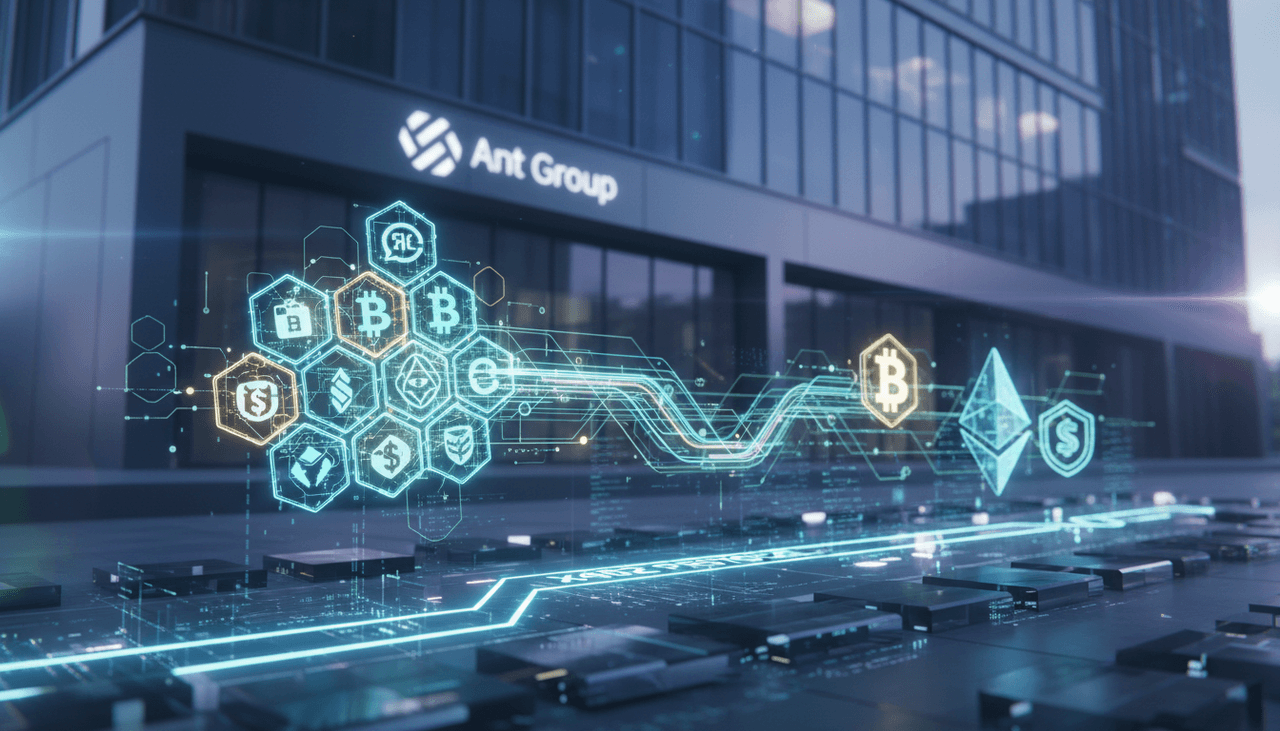
Ant Digital Technologies, the blockchain arm of Ant Group, has launched Anvita, a new platform designed to enable AI agents to autonomously transact, hold assets, and settle payments on crypto rails, signaling a significant shift towards an "agent-to-agent economy."
Why it matters
Ant Digital Technologies has unveiled Anvita, a two-pronged platform comprising Anvita TaaS for institutional asset tokenization and Anvita Flow, which empowers AI agents to coordinate tasks and settle microtransactions using stablecoins via the x402 protocol. This move positions Ant Group at the forefront of a burgeoning "agentic economy," where AI agents could autonomously manage assets and execute trades, challenging traditional financial paradigms and intensifying competition among tech and finance giants like Visa, Coinbase, and Google in the AI-driven commerce space, despite current limited usage.
Market focus
Key takeaways
- Ant Group's Anvita platform enables AI agents to autonomously hold assets, trade, and settle payments on crypto rails, pioneering an "agent-to-agent economy."
- Anvita leverages the x402 protocol for instant, sub-cent stablecoin microtransactions, bypassing traditional payment systems and human approvals.
- This development signifies a major convergence of AI and blockchain, potentially transforming market structure, liquidity, and automated financial services.
- While major players like Visa, Coinbase, and Google are also building in this space, the "agentic economy" is still nascent, with current usage volumes remaining low.
- Traders and investors should monitor the growth of agent-driven transaction volumes and the evolution of protocols supporting AI autonomy, as this trend could redefine future market dynamics.
Ant Group's Anvita: Powering an Autonomous "Agent-to-Agent Economy"
Ant Digital Technologies, the blockchain division of Chinese conglomerate Ant Group, has unveiled a groundbreaking platform named Anvita, designed to empower artificial intelligence (AI) agents to autonomously participate in the crypto economy. Launched at the company's Real Up summit in Cannes, Anvita represents Ant Group's strategic bet on an emerging "agent-to-agent economy," where software programs, rather than humans, become the primary actors in holding assets, executing trades, and making payments.
What Anvita Brings to the Table
- Anvita TaaS (Tokenization-as-a-Service): This service focuses on institutional-grade tokenization of real-world assets (RWAs), providing essential custody and treasury tools. While RWA tokenization has been a significant trend, Ant's vision extends beyond static digital assets.
- Anvita Flow: This is the operational hub for AI agents. It's a platform where agents can register, discover each other, coordinate complex tasks, and settle payments in real-time. The integration of the x402 protocol, co-developed by Coinbase and Cloudflare, is a critical feature, enabling instant, sub-cent stablecoin payments directly over HTTP, primarily using USDC. This bypasses traditional billing systems and human approvals, streamlining micro-transactions.
Zhuoqun Bian, president of blockchain business at Ant Digital Technologies, emphasized the transformative potential: "Pure RWA is just the 'static infrastructure' of digital assets. The real transformation lies in moving toward an onchain agentic economy, where autonomous agents will not just analyze data — they will hold assets, execute trades, and optimize portfolios."
Implications for the Crypto Market and Beyond
The launch of Anvita signals a significant shift in how value might be exchanged and managed in the digital realm. For traders and investors, this development points to a future where AI agents could become sophisticated market participants, executing complex strategies, managing portfolios, and even engaging in high-frequency trading with minimal human oversight. This could introduce new layers of liquidity and efficiency, but also novel risks and challenges related to agent autonomy and market manipulation.
The "agentic economy" concept has profound implications for protocol design and infrastructure. Protocols will need to be robust enough to handle high volumes of automated transactions, and security models will require adaptation to protect assets managed by AI. The ability for agents to settle micro-transactions instantly and cheaply could unlock entirely new business models and services, particularly in areas requiring granular payments or automated resource allocation.
A Crowded but Nascent Field
Ant Digital Technologies isn't alone in recognizing the potential of AI-driven commerce. Major players are already staking their claims:
- Visa has its Trusted Agent Protocol, aiming for agent-based payments via traditional card rails.
- Coinbase, a co-developer of x402, is focused on stablecoin micropayments.
- Google unveiled its Agent Payments Protocol (AP2) with broad industry backing.
- Mastercard's acquisition of stablecoin firm BVNK for $1.8 billion underscores traditional finance's interest in blockchain settlement for agents.
Even the Solana network has reported over 15 million onchain agent transactions, and Coinbase CEO Brian Armstrong anticipates agent transaction volume will eventually surpass human activity. McKinsey projects AI agents could mediate trillions in global consumer commerce by 2030.
Current Reality and Future Outlook
Despite the ambitious projections and significant industry interest, the "agentic economy" remains in its infancy. The x402 protocol, for instance, currently sees modest daily volumes, with analysts noting a significant portion attributed to testing or artificial activity. This highlights the chasm between theoretical potential and practical adoption.
For the crypto community, Anvita's launch is a clear indicator of where major financial technology firms are directing their innovation efforts. It underscores the growing convergence of AI and blockchain, suggesting that future value creation will increasingly involve autonomous entities interacting on decentralized networks. While the immediate impact on daily trading might be limited, the long-term implications for market structure, liquidity, and even regulatory frameworks are substantial. Monitoring the adoption and transaction volumes of platforms like Anvita and competing protocols will be crucial for understanding the trajectory of this evolving landscape.