CZ Eyes Binance.US Revival to Bridge US to Global Crypto Liquidity Amidst Policy Shifts: LatestDeFiNews
Binance founder Changpeng "CZ" Zhao has signaled a potential revival of Binance.US, aiming to grant American users access to deeper global crypto liquidity and better prices, amidst what he describes as improving U.S. regulatory sentiment.
Why it matters
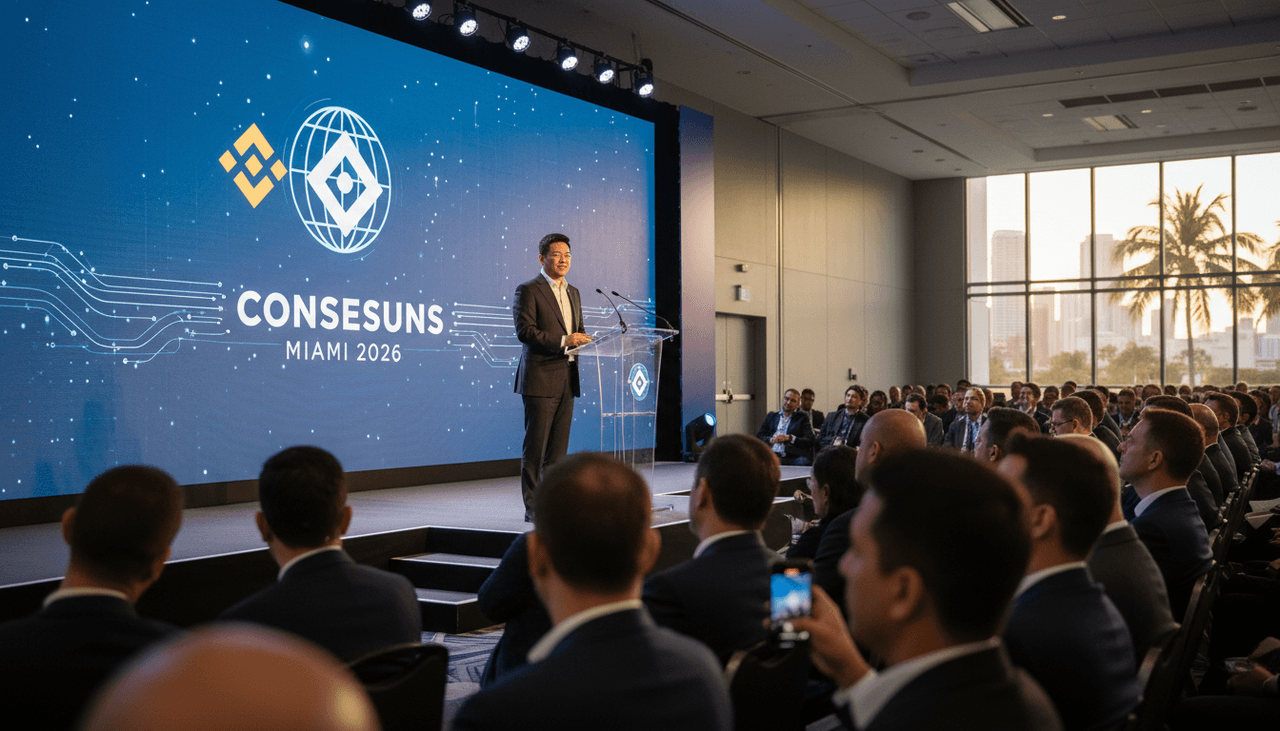
Speaking at Consensus Miami 2026, Changpeng "CZ" Zhao, founder of Binance, discussed the possibility of revitalizing Binance.US to reconnect American crypto traders with the world's most liquid markets. Zhao emphasized that the U.S. currently lacks access to optimal crypto pricing and that recent shifts in U.S. policy, including proposed legislation like the CLARITY Act, are creating a more favorable environment for crypto businesses and developers to return. He also highlighted BNB Chain's potential as a payments rail for AI agents and its current under-exposure to U.S. institutional investors as a significant opportunity.
Market focus
Key takeaways
- Binance founder CZ is exploring a Binance.US revival to provide American users with access to deeper global crypto liquidity and more competitive pricing.
- CZ's renewed focus on the U.S. market is driven by his belief in improving U.S. crypto regulatory policies, including proposed legislation like the CLARITY Act, and the return of developers.
- BNB Chain is highlighted as currently underexposed in the U.S., presenting an investment opportunity as institutional access is expected to grow.
- CZ envisions BNB Chain as the optimal payments rail for automated transactions between future AI agents, emphasizing its suitability over traditional financial systems.
Binance founder Changpeng "CZ" Zhao has publicly floated the idea of a revived Binance.US, aiming to restore American crypto users' access to the world's deepest liquidity and most competitive prices. Speaking at Consensus Miami 2026, Zhao's comments signal a potential strategic shift, driven by his perception of an improving U.S. regulatory landscape.
The Quest for Global Liquidity
For years, U.S. crypto traders have operated within a more constrained market, often disconnected from the robust liquidity pools available internationally. CZ highlighted this disparity, stating, "The best liquidity in crypto is outside the U.S. Crypto is one of the very few markets that U.S. don't have access to the best prices." He expressed Binance's desire to bridge this gap, either through a revitalized Binance.US or another mechanism to provide American consumers with world-class access and pricing.
This ambition comes with significant historical context. CZ famously resigned as Binance CEO and pleaded guilty to U.S. charges two years prior, subsequently serving a four-month prison sentence and receiving a presidential pardon last year. His current optimism suggests a belief that the regulatory environment has evolved sufficiently to warrant renewed efforts in the U.S. market.
A Shifting Regulatory Tide?
Zhao pointed to a notable change in U.S. policy towards crypto over the past 18 months, which has encouraged him to engage more with American builders, regulators, and policymakers. He even suggested the U.S. is now "leading in the world in terms of crypto policies," citing market structure legislation like the CLARITY Act as positive indicators. This perceived shift is reportedly drawing developers and crypto firms back to the U.S. after years of operating abroad in regions like Abu Dhabi, Hong Kong, and Singapore.
Binance.US, currently under the leadership of CEO Stephen Gregory, has already been charting its own comeback, with plans to expand beyond spot trading into derivatives and prediction markets. A direct endorsement and strategic push from CZ could significantly accelerate these efforts.
BNB Chain's Dual Opportunity: US Exposure and AI Payments
Beyond the immediate focus on Binance.US, CZ also drew attention to BNB Chain, arguing it remains underexposed in the U.S. compared to other Layer 1 blockchains. Despite its limited domestic activity, BNB Chain has established a builder house in New York and a presence in San Francisco, with increased U.S. investment activity through YZi Labs (formerly Binance Labs), which recently launched a $1 billion fund for BNB Chain projects.
Zhao views this lack of institutional access to BNB in the U.S. as a unique opportunity for investors. "When the institutions come in, that's generally better for the token," he noted, implying significant upside potential as U.S. institutions gain easier access to the asset.
Furthermore, CZ positioned BNB Chain as a critical infrastructure for the future of artificial intelligence. He contended that AI agents will require blockchain rails for automated transactions, arguing that they are inherently better suited than traditional credit cards or banking systems for cross-border, machine-to-machine payments. "BNB Chain should just be the money for agents," he asserted, envisioning the network as the optimal payment layer for an emerging AI-driven economy, albeit one still in its nascent stages.
What This Means for the Market
CZ's comments underscore a renewed strategic focus on the U.S. market from a major global player. For traders, a revitalized Binance.US could mean access to more competitive pricing and a broader range of assets. For investors, the potential for increased institutional adoption of BNB, coupled with its proposed role in AI agent payments, presents a compelling narrative. The broader crypto community will be watching closely to see if the U.S. regulatory environment indeed continues to evolve in a way that facilitates this vision, potentially reshaping the landscape of crypto access and innovation in the country.
FAQ
Why is CZ advocating for a Binance.US revival now?
CZ believes U.S. crypto policies are improving, making the environment more conducive for re-engagement. He aims to provide American users access to better global liquidity and prices, which he states are currently superior outside the U.S.
What is the significance of BNB Chain in CZ's vision?
CZ sees BNB Chain as a key player for automated AI agent transactions, positioning it as the 'money for agents.' He also identifies its current under-exposure in the U.S. market as a significant opportunity for institutional investment and growth.