Polymarket Pulls Iran Rescue Market Amid Regulatory Storm: LatestDeFiNews
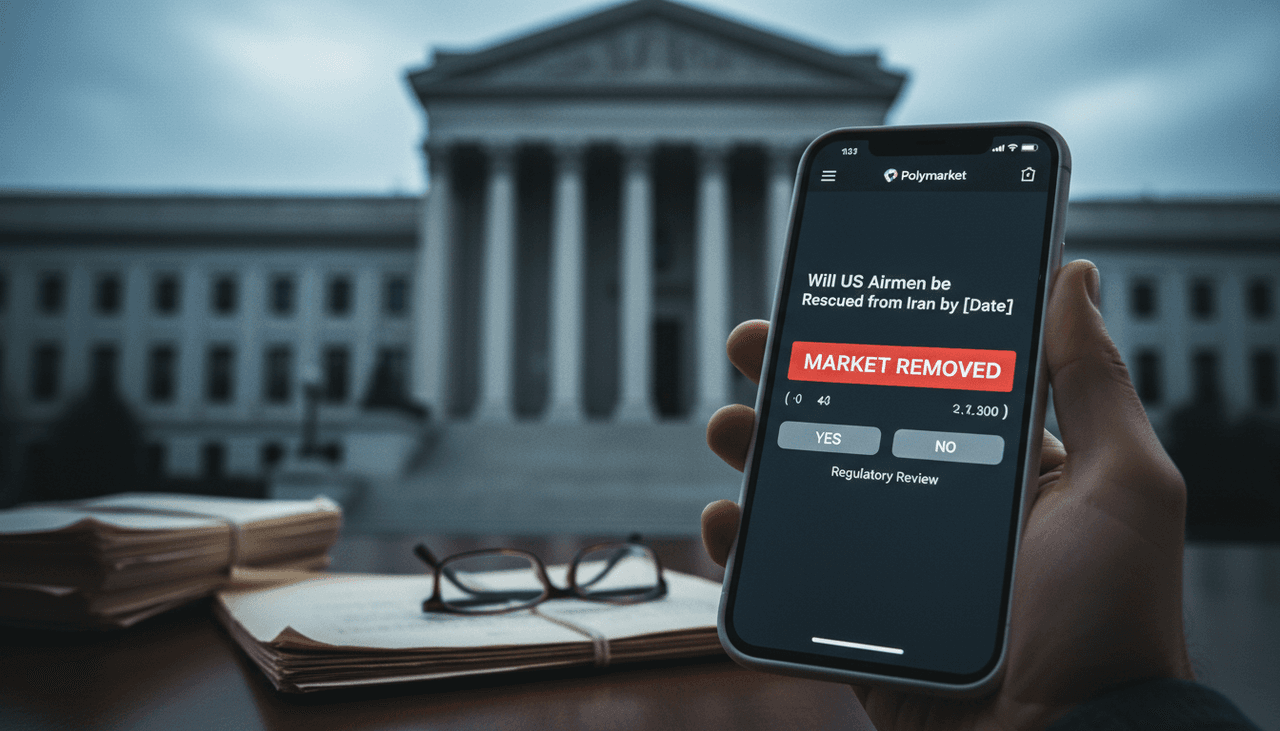
Prediction market Polymarket has removed a controversial market concerning the rescue of U.S. service members in Iran, following intense backlash and mounting regulatory pressure from lawmakers and federal agencies.
Why it matters
Polymarket recently delisted a betting market related to the rescue of U.S. airmen in Iran after an F-15E jet was shot down, drawing sharp criticism from lawmakers like Rep. Seth Moulton, who deemed it 'disgusting.' This incident highlights the escalating regulatory scrutiny faced by prediction markets, with congressional Democrats proposing legislation to ban contracts tied to elections, war, and government actions. The CFTC is also actively asserting its authority, while the industry continues to see expansion with new players like Kalshi securing licenses and JPMorgan expressing interest, creating a complex landscape for the sector.
Market focus
Key takeaways
- Polymarket removed a controversial market on U.S. service member rescue in Iran after lawmaker backlash, highlighting ethical concerns in prediction markets.
- The incident intensifies regulatory pressure, with Congress proposing bans on markets tied to elections, war, and government actions.
- The CFTC is actively asserting federal oversight, filing lawsuits against states attempting to bypass regulations.
- Despite regulatory challenges, the prediction market industry continues to expand, with Kalshi securing institutional licenses and JPMorgan showing interest.
Polymarket Bows to Pressure, Removes Controversial Iran Rescue Market
Prediction market platform Polymarket has recently removed a highly controversial market that allowed users to wager on the rescue of U.S. service members in Iran. The decision follows intense backlash from lawmakers and the public, casting a fresh spotlight on the ethical boundaries and regulatory future of the burgeoning prediction market industry.
The market in question permitted users to bet on when the U.S. would confirm the rescue of two airmen after an F-15E fighter jet was reportedly shot down over Iran. The crew members have since been rescued. However, the very existence of such a market drew swift condemnation, with critics arguing it reduced a sensitive military operation to a mere financial trade.
Lawmakers Decry 'Disgusting' Market
Among the most vocal critics was Representative Seth Moulton, a Democrat from Massachusetts, who publicly labeled the listing as "disgusting." Moulton, known for his hard stance on prediction markets, had previously banned his staff from using platforms like Polymarket and Kalshi, citing concerns that financial incentives could unduly influence policy decisions.
Polymarket acknowledged the controversy, with a spokesperson stating that the listing "did not meet its integrity standards" and was removed shortly after its appearance. The company also indicated it is reviewing its internal safeguards to prevent similar incidents in the future.
Mounting Regulatory Scrutiny on Prediction Markets
This incident is not an isolated event but rather a symptom of a broader trend: prediction markets are facing escalating pressure from Washington. A bipartisan group of congressional Democrats recently introduced legislation aimed at banning contracts tied to elections, war, and government actions. Separately, several senators have urged the Commodity Futures Trading Commission (CFTC) to prohibit markets linked to individual deaths, citing national security concerns.
Regulators are also actively asserting their authority over the sector. The CFTC recently filed lawsuits against three states, alleging attempts to bypass federal oversight of prediction markets. Even beyond politics, scrutiny has expanded, with the NFL requesting operators to avoid offering contracts deemed objectionable or susceptible to manipulation, such as bets tied to officiating decisions.
Industry Resilience Amidst Headwinds
Despite the regulatory headwinds, the prediction market industry continues to show signs of expansion and resilience. Kalshi, another prominent player, recently secured a license to offer margin trading to institutional investors. Furthermore, new entrants are emerging, with even financial giants like JPMorgan, through its CEO Jamie Dimon, signaling interest in exploring the space.
What This Means for Traders and the Community
For traders, investors, and the wider crypto community, Polymarket's decision and the surrounding regulatory actions underscore the inherent risks and evolving landscape of prediction markets. While these platforms offer unique opportunities for aggregating collective intelligence and hedging against future events, the ethical implications and potential for regulatory intervention remain significant.
The current environment suggests that platforms will need to navigate an increasingly complex legal and ethical terrain. Traders should anticipate continued scrutiny, potential shifts in market offerings, and the possibility of new legislative frameworks. Understanding these dynamics is crucial for anyone participating in or building within the prediction market ecosystem, emphasizing the need for due diligence and awareness of evolving regulatory boundaries.
FAQ
Why did Polymarket remove the Iran rescue market?
Polymarket removed the market due to intense backlash and criticism from lawmakers, particularly Rep. Seth Moulton, who deemed it 'disgusting' and argued it commodified a sensitive military operation. The company stated the listing did not meet its integrity standards.
What are the broader regulatory implications for prediction markets?
The incident highlights increasing regulatory scrutiny. Congressional Democrats are pushing for legislation to ban contracts tied to elections, war, and government actions, while the CFTC is actively asserting federal oversight and filing lawsuits against states attempting to bypass regulations. This indicates a tightening regulatory environment for the entire sector.