Scroll Implements Drastic Cost Cuts After Ether.fi Migration to Optimism Drains $160M TVL: LatestDeFiNews
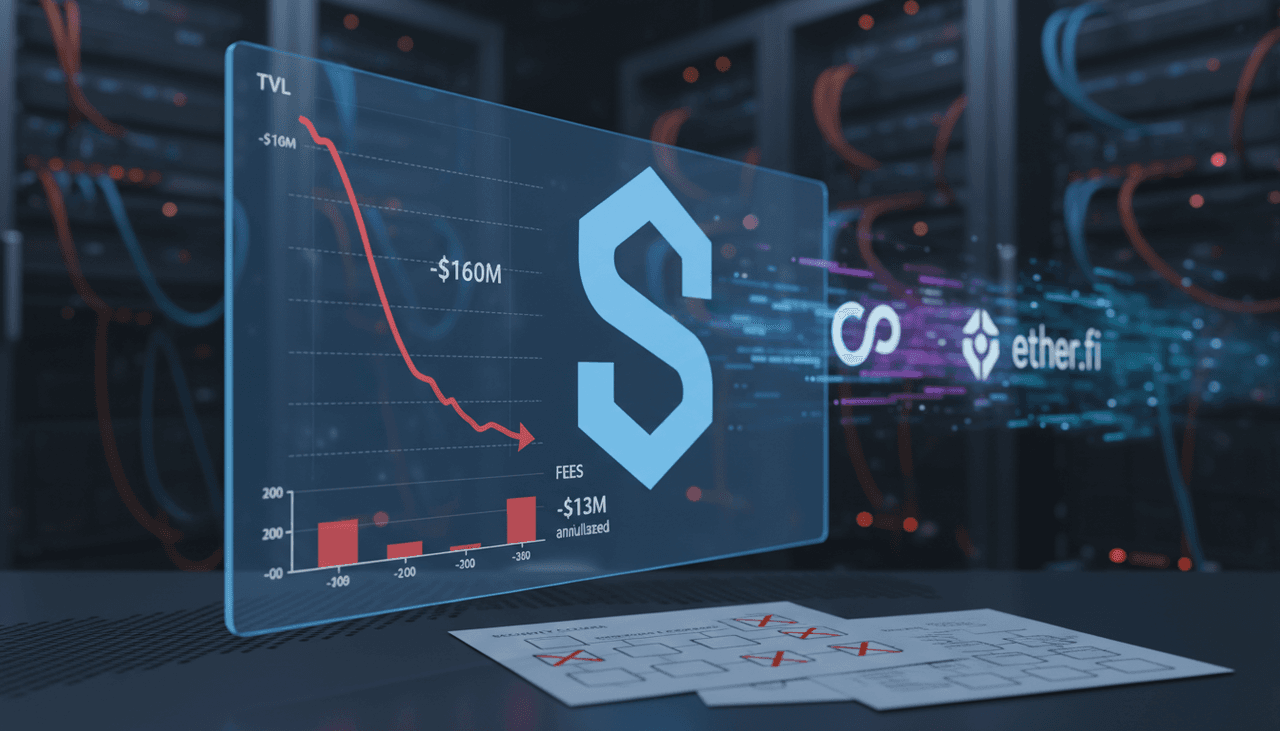
Ethereum Layer-2 network Scroll is dissolving its Security Council and reducing staff to curb expenses, following the departure of its top protocol, Ether.fi, which migrated to Optimism, taking $160 million in TVL and $13 million in annualized fees.
Why it matters
Ethereum Layer-2 solution Scroll is undergoing significant restructuring, including the dissolution of its decentralized Security Council and staff reductions, in response to a substantial financial hit. This move comes after Ether.fi, previously Scroll's largest fee-generating dApp, migrated to Optimism's OP mainnet, resulting in a loss of approximately $160 million in Total Value Locked (TVL) and $13 million in annualized fees. The network also faced scrutiny for temporarily inflating gas fees by 1,280% in early April, extracting over $50,000 in excess costs from users, raising questions about network transparency and user trust.
Market focus
Key takeaways
- Scroll's financial health is under pressure, signaling potential instability for L2 protocols heavily reliant on single dApps for TVL and fee generation.
- The L2 landscape remains highly competitive, with protocols actively poaching users and liquidity, impacting network sustainability and requiring robust economic models.
- Temporary, artificial gas fee spikes can severely erode user trust and highlight transparency concerns within Layer-2 operations, demanding greater accountability.
- Investors and traders should closely monitor L2 TVL, fee generation, and governance changes as critical indicators of network health, competitive positioning, and potential risks.
Ethereum Layer-2 network Scroll is implementing drastic cost-cutting measures, including the dissolution of its decentralized Security Council and significant staff reductions. This strategic pivot follows a substantial financial blow dealt by the migration of its top fee-generating protocol, Ether.fi, to Optimism's OP mainnet.
The Exodus: Ether.fi's Migration and Its Impact
The departure of Ether.fi, a prominent crypto neobank and Scroll's largest decentralized application (dApp), occurred two months prior and has had a profound impact. The migration saw approximately 300,000 user accounts and over $160 million in Total Value Locked (TVL) shift away from Scroll. According to DeFiLlama data, this move also stripped Scroll of an estimated $13 million in annualized fees, significantly reducing the network's TVL to around $23 million.
This event underscores the fierce competition within the Layer-2 ecosystem, where protocols are constantly vying for liquidity and user engagement. The ability of a single major dApp to dramatically alter a network's financial health highlights the inherent risks and dependencies in the nascent L2 landscape.
Scroll's Response: Restructuring and Cost Optimization
In response to this financial downturn, Scroll's core contributors announced a plan to dissolve its Security Council. A governance update cited the council's high operational cost relative to its actual usage as the primary reason for its discontinuation. Control of the network is slated to transfer to an internal team-managed account within the next ten days, pending approval from the current council.
Beyond the Security Council, Scroll is also laying off several contributors within its Decentralized Autonomous Organization (DAO) and scaling back the capacity of its operational committees. These measures are presented as necessary steps to optimize costs and ensure the network's long-term sustainability in a more lean operational model.
Controversy: Artificial Gas Fee Spike
Adding to Scroll's recent turbulence was a controversial spike in network fees. Analysis from L2BEAT revealed that over six days in early April, Scroll artificially inflated the amount it charges to publish data to the Ethereum mainnet by a factor of 1,280. This maneuver created the illusion of a massive surge in 30-day chain fee momentum but forced users to pay over $50,000 in excess transaction fees for data posting that would ordinarily cost around $280. The extreme, temporary repricing was rolled back on April 9.
This incident raises questions about network transparency and the potential for L2s to manipulate fee structures, which could erode user trust and impact the broader perception of Layer-2 integrity.
Implications for Traders and the L2 Ecosystem
For traders and investors, Scroll's situation serves as a stark reminder of the volatility and competitive pressures within the DeFi and Layer-2 sectors. The rapid shift of TVL and user base demonstrates that even established L2s are not immune to significant outflows if a more attractive or efficient alternative emerges. This event could prompt closer scrutiny of other L2s' reliance on single protocols and their underlying economic models.
The cost-cutting measures, while necessary for Scroll's survival, also signal a period of uncertainty for the network's development and governance. The transition of control from a decentralized council to an internal team, though framed as an efficiency measure, could be viewed by some as a step back from decentralization principles.
Moving forward, the market will be watching how Scroll navigates this challenging period. Key indicators will include its ability to attract new protocols, rebuild its TVL, and regain user confidence, especially after the gas fee controversy. The broader L2 landscape will likely continue to see intense competition, with network efficiency, security, and developer support being critical differentiators.