Bitcoin Plunges Below $78,000 as Hawkish Fed Remarks Spark Market Jitters: LatestDeFiNews
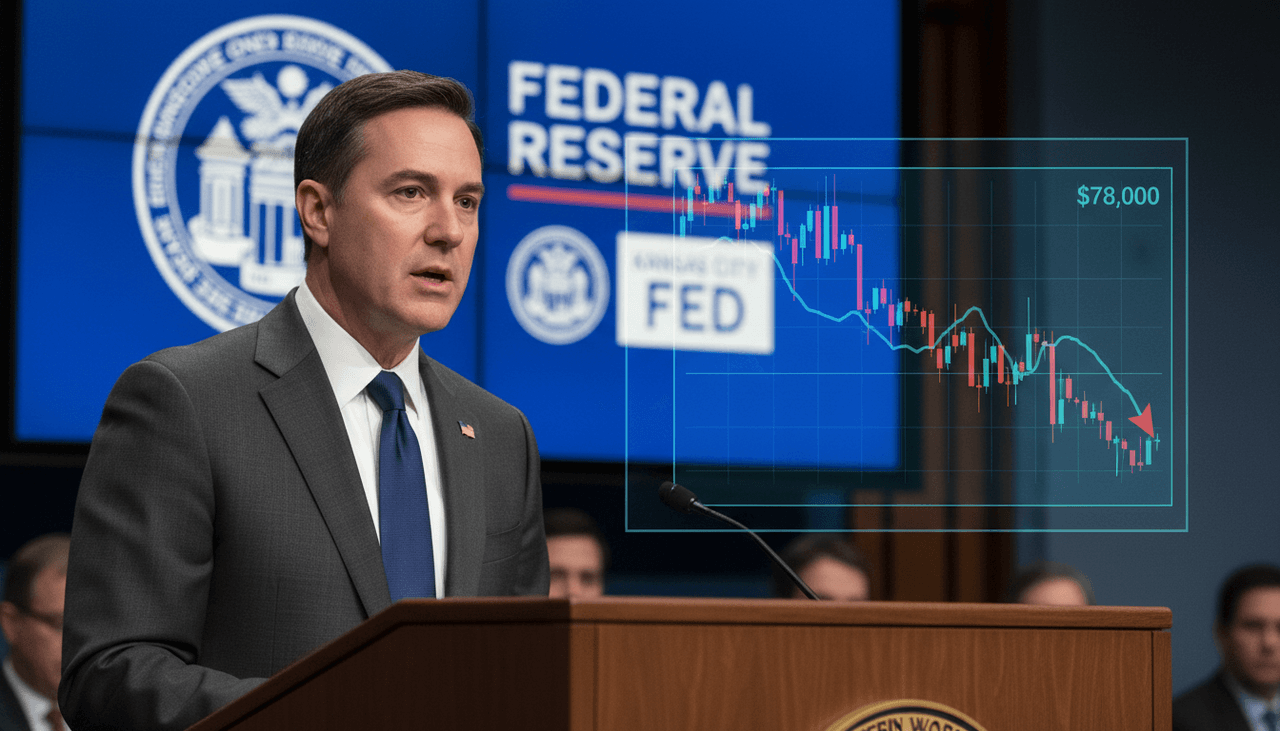
Bitcoin's price tumbled below the $78,000 mark following former Federal Reserve Governor Kevin Warsh's hawkish comments at the Kansas City Fed's annual symposium, signaling potential headwinds for risk assets.
Why it matters
The cryptocurrency market experienced a notable downturn as Bitcoin (BTC) breached the $78,000 support level, reacting sharply to remarks made by former Federal Reserve Governor Kevin Warsh. Speaking at the influential Kansas City Fed's annual symposium, Warsh emphasized the ongoing need for monetary tightening to combat inflation, stating, "We have work to do" on prices. These hawkish sentiments have sent ripples through global financial markets, with crypto investors now bracing for potential shifts in central bank policy and liquidity conditions.
Market focus
Key takeaways
- Bitcoin dropped below $78,000 following hawkish remarks from former Fed Governor Kevin Warsh at the Kansas City Fed symposium, signaling continued monetary tightening.
- Warsh's comments imply sustained higher interest rates and reduced liquidity, which typically negatively impact risk assets like cryptocurrencies.
- Traders should closely monitor key Bitcoin support levels, alongside upcoming Fed communications, inflation data, and employment figures for future market direction.
- A prolonged hawkish environment may prompt investors to re-evaluate crypto portfolio allocations and could pose funding challenges for DeFi and Web3 projects.
Bitcoin (BTC) has taken a significant hit, sliding below the $78,000 threshold as market participants digest hawkish remarks from former Federal Reserve Governor Kevin Warsh. Speaking at the highly anticipated Kansas City Fed's annual symposium, Warsh delivered a stark message on inflation, stating unequivocally, "We have work to do" on prices. This pronouncement has sent a clear signal of continued monetary tightening, rattling risk assets across the board, including the volatile cryptocurrency market.
Warsh's Hawkish Stance and Its Immediate Impact
Kevin Warsh, a respected voice in monetary policy circles and a former Federal Reserve Governor, used the influential platform of the Kansas City Fed's annual symposium to underscore the central bank's commitment to reining in inflation. His "hawkish" comments suggest a sustained period of higher interest rates and reduced liquidity, a stance typically unfavorable for growth-oriented and speculative assets like cryptocurrencies. The immediate consequence was a swift downward movement for Bitcoin, which had been hovering near the $80,000 mark.
The Kansas City Fed's symposium is a critical event for financial markets, often serving as a bellwether for future monetary policy. Warsh's direct language has reinforced fears that the Fed is prepared to maintain a restrictive stance for longer than some investors had hoped, dampening enthusiasm for risk-on trades.
Broader Market Implications and Liquidity Concerns
The ripple effect of Warsh's statements extends beyond just Bitcoin. Traditional equity markets also showed signs of weakness, reflecting a broader concern about the cost of capital and economic growth prospects. For the crypto market, a hawkish Fed translates directly into tighter liquidity conditions. When interest rates rise, the cost of borrowing increases, making it less attractive for institutions and individuals to deploy capital into higher-risk ventures. This can lead to capital flight from crypto assets as investors seek safer, yield-bearing alternatives.
Furthermore, the narrative of "digital gold" for Bitcoin often faces scrutiny during periods of monetary tightening. While some proponents argue BTC acts as an inflation hedge, its recent correlation with tech stocks and other risk assets suggests it remains highly sensitive to macroeconomic shifts and central bank policy.
What Traders and Investors Should Watch Next
The immediate focus for Bitcoin traders will be on key support levels. The breach of $78,000 is a psychological blow, and attention will now turn to the next significant technical floors. Sustained selling pressure could see BTC test lower boundaries, potentially around the $75,000 or even $72,000 marks, depending on the broader market sentiment and upcoming economic data releases.
Beyond technical analysis, market participants should closely monitor:
- Upcoming Fed Communications: Any further speeches or minutes from Federal Reserve meetings will be scrutinized for clues on the pace and duration of monetary tightening.
- Inflation Data: Key inflation indicators (CPI, PCE) will continue to influence the Fed's stance. Any signs of persistent inflation could reinforce hawkish sentiment.
- Employment Figures: Strong employment data might give the Fed more leeway to continue tightening without immediate concerns about economic contraction.
- Institutional Inflows/Outflows: Watch for shifts in institutional interest in Bitcoin ETFs and other crypto investment products, as these often reflect broader sentiment.
Positioning for a Hawkish Environment
In a climate of sustained hawkish monetary policy, investors may reconsider their portfolio allocations. For crypto, this could mean a shift towards assets perceived as having stronger fundamentals, clearer utility, or those less correlated with traditional risk assets, though such assets are rare in the current market structure. Builders within the DeFi and Web3 space might face challenges in securing funding, as venture capital becomes more discerning in a higher-interest-rate environment.
The current market reaction underscores the interconnectedness of the crypto ecosystem with global macroeconomic forces. While Bitcoin's long-term trajectory remains a subject of debate, its short-to-medium term performance is undeniably influenced by the actions and rhetoric of central banks like the Federal Reserve. Navigating this period will require vigilance, strategic positioning, and a keen understanding of both crypto-specific and broader economic indicators.
FAQ
What does "hawkish" mean in central banking?
In central banking, "hawkish" refers to a stance that prioritizes controlling inflation, often through higher interest rates and tighter monetary policy, even if it means slowing economic growth.
Who is Kevin Warsh?
Kevin Warsh is a former Governor of the Federal Reserve System, known for his insights into monetary policy and financial markets. His remarks at the Kansas City Fed symposium carry significant weight.
What is the Kansas City Fed's annual symposium?
The Kansas City Fed's annual Economic Policy Symposium, held in Jackson Hole, Wyoming, is a prestigious gathering of central bankers, finance ministers, academics, and financial market participants. It's often a platform for significant policy discussions and signals.