JPMorgan: 'Debasement Trade' in Bitcoin and Gold Cools Amid Easing Geopolitical Tensions: LatestDeFiNews
JPMorgan analysts report a significant cooling in the "debasement trade," with investors pulling capital from Bitcoin and gold as inflation fears subside and Middle East tensions show signs of easing.
Why it matters
A recent report from JPMorgan indicates that the "debasement trade," characterized by investor positioning in assets like Bitcoin and gold as hedges against inflation and geopolitical instability, is losing momentum. The bank points to sustained outflows from Bitcoin and gold exchange-traded funds (ETFs), alongside reduced institutional futures exposure, as evidence. This shift suggests investors may be anticipating a de-escalation of US-Iran tensions and a broader cooling of inflationary pressures, leading to a retreat from these macro hedges.
Market focus
Key takeaways
- JPMorgan reports a significant cooling in the "debasement trade" for Bitcoin and gold, indicating a shift in investor sentiment.
- Evidence includes sustained outflows from Bitcoin and gold ETFs, alongside reduced institutional futures positions.
- The bank attributes this trend to easing inflation fears and the potential for de-escalation in US-Iran geopolitical tensions.
- Investors are re-evaluating the need for macro hedges, suggesting a potential pivot in capital allocation away from these traditional and digital safe havens.
The long-standing "debasement trade" in Bitcoin and gold, a strategy favored by investors seeking refuge from inflation and geopolitical uncertainty, is showing clear signs of waning, according to a recent analysis from JPMorgan. The investment bank's report suggests a significant shift in investor sentiment, driven by a perceived easing of global tensions and a cooling of inflationary concerns.
The Fading 'Debasement Trade'
JPMorgan analysts, led by Nikolaos Panigirtzoglou, highlighted that the demand for both Bitcoin (BTC) and gold, which surged during periods of heightened geopolitical risk and inflation fears, is now losing steam. This trend marks a notable departure from earlier this year when renewed conflict in the Middle East fueled worries about rising oil prices and a resurgence of inflationary pressures, prompting a rush into these traditional and digital safe-haven assets.
What is the 'Debasement Trade'?
At its core, the "debasement trade" involves investors allocating capital to assets perceived as robust stores of value during times when governments and central banks are expected to increase spending, expand debt, or maintain loose monetary policies. Bitcoin, often dubbed 'digital gold,' and physical gold itself, typically benefit from such an environment, acting as a hedge against currency devaluation and economic instability.
Evidence of Investor Retreat
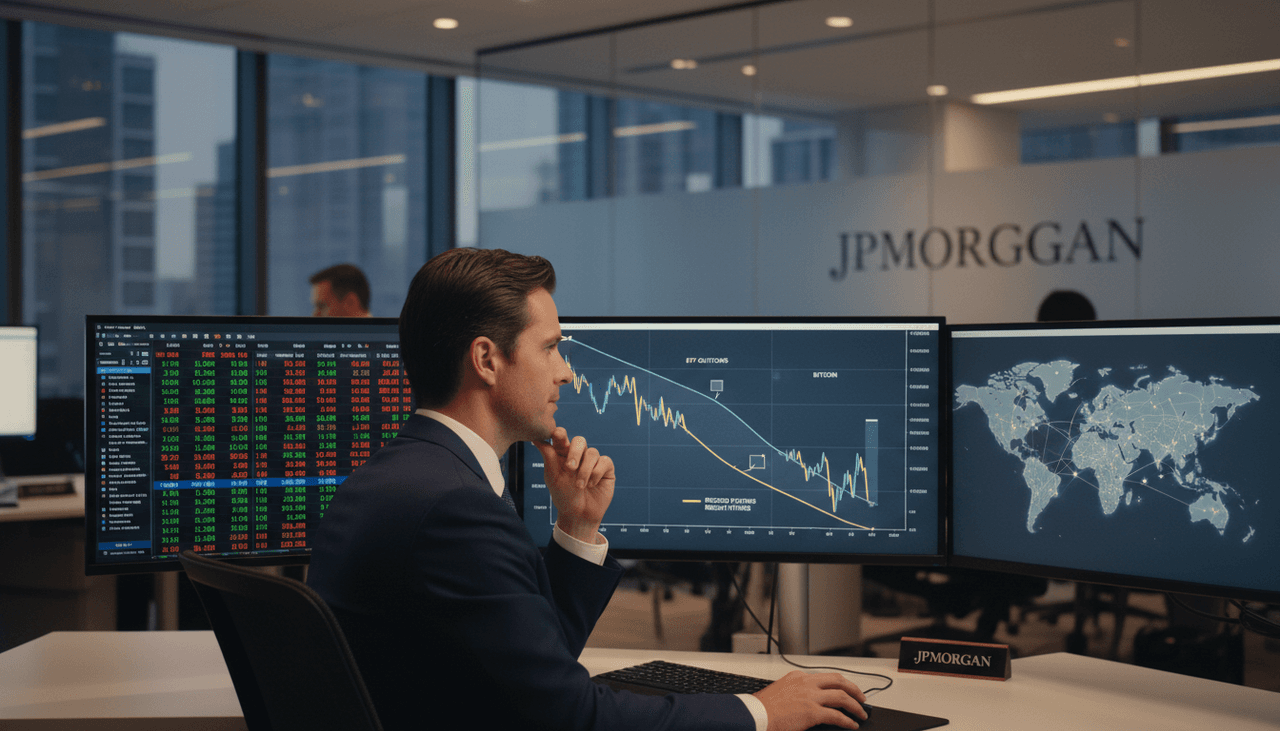
The bank's report points to concrete evidence of this reversal. Over the past two weeks, both Bitcoin and gold exchange-traded funds (ETFs) have experienced significant capital outflows. This trend is mirrored in the futures markets, where institutional positions in CME Bitcoin and gold futures have notably weakened. JPMorgan emphasizes that this isn't a rotation from Bitcoin into gold, or vice-versa, but rather a simultaneous softening of demand for both assets, indicating a broader pullback from macro hedge strategies.
Geopolitical Easing and Inflation Outlook
A key factor underpinning this shift, according to JPMorgan, is the growing expectation that tensions between the United States and Iran could ease. The report suggests that investors may be pre-positioning for a potential diplomatic agreement between the two nations, which would reduce the perceived need for the inflation and geopolitical hedges that had previously bolstered Bitcoin and gold prices. Coupled with a broader cooling of inflation fears, this outlook is prompting a re-evaluation of risk across portfolios.
Implications for Traders and Investors
For traders and investors, this development signals a potential pivot in market dynamics. The narrative of Bitcoin and gold as indispensable hedges against a perpetually inflationary and unstable world may be losing some of its immediate potency. Market participants should closely monitor geopolitical developments, particularly in the Middle East, and global inflation data. A sustained period of de-escalation and controlled inflation could further diminish the appeal of these assets as primary macro hedges, potentially redirecting capital towards growth-oriented investments or other asset classes. The unwinding of these positions could introduce volatility, making careful risk management paramount.