Kalshi Faces New Legal Challenge as Connecticut Joins Prediction Market Fight: LatestDeFiNews
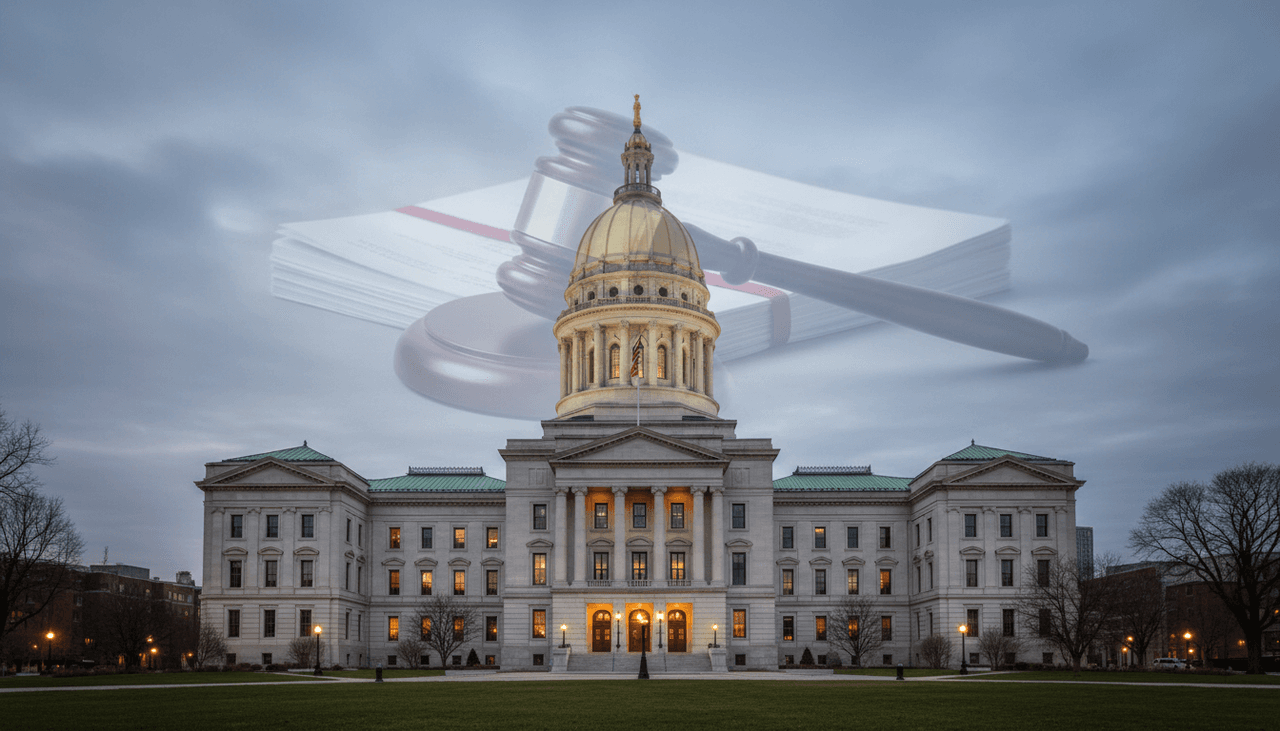
The legal landscape for prediction markets is growing increasingly complex as Connecticut files a lawsuit against Kalshi, adding another front to the ongoing regulatory skirmishes that could ultimately reach the Supreme Court.
Why it matters
Connecticut has initiated legal action against prediction market platform Kalshi, further escalating the contentious regulatory environment surrounding these financial instruments. This new lawsuit contributes to a series of legal battles across state and federal jurisdictions, which have so far yielded mixed results, pointing towards a potential future review by the U.S. Supreme Court to establish definitive legal precedent.
Market focus
Key takeaways
- Connecticut's lawsuit against Kalshi intensifies the legal battle over prediction markets in the U.S., adding to a series of ongoing regulatory challenges.
- Conflicting state and federal court rulings create significant regulatory uncertainty, suggesting the U.S. Supreme Court may eventually need to provide definitive clarity.
- Traders and investors face ongoing risks regarding access and participation in prediction markets, as legal outcomes could abruptly alter platform availability and operational scope.
- The resolution of these legal disputes will critically shape the future, accessibility, and innovation potential of prediction market platforms across the United States.
A Widening Legal Front for Prediction Markets
Connecticut has thrown its weight into the escalating legal battle surrounding prediction markets, filing a lawsuit against Kalshi, a prominent regulated platform. This move marks another significant escalation in the ongoing regulatory skirmishes that are shaping the future of these innovative financial instruments in the United States.
The lawsuit from Connecticut isn't an isolated incident but rather the latest salvo in a protracted legal war. Prediction markets, which allow users to bet on future events ranging from economic indicators to political outcomes, have long occupied a gray area in U.S. financial regulation. While the Commodity Futures Trading Commission (CFTC) has asserted jurisdiction over some aspects, states are increasingly taking their own stances, often in opposition to platforms like Kalshi.
This fragmented approach has led to a patchwork of legal outcomes. Federal courts have delivered mixed rulings, sometimes favoring the platforms and other times upholding regulatory challenges. This inconsistency creates an environment of uncertainty, not just for operators but also for participants.
Implications for Traders and Market Participants
For traders and investors, the Connecticut lawsuit underscores the inherent regulatory risk associated with prediction markets. Access to these platforms can be abruptly curtailed or altered based on court decisions or state-level actions. The legal ambiguity can also deter institutional participation and limit the growth of liquidity, impacting pricing efficiency and market depth.
The core issue often revolves around whether these markets constitute illegal gambling or legitimate financial instruments for hedging and information aggregation. Regulators frequently lean towards the former, citing consumer protection concerns, while platforms argue for their utility in price discovery and risk management.
What's Next: A Potential Supreme Court Showdown?
The current landscape of conflicting state and federal rulings strongly suggests that the ultimate arbiter may be the U.S. Supreme Court. A definitive ruling from the nation's highest court would provide much-needed clarity, establishing a precedent that could either legitimize prediction markets nationwide or severely restrict their operation.
Market participants should closely monitor the progress of the Connecticut case, alongside other ongoing legal challenges. Any significant ruling could trigger ripple effects across the industry, influencing not only Kalshi but also other platforms like Polymarket, which operates under a different regulatory framework but faces similar existential questions. The regulatory posture of the CFTC, particularly regarding new product approvals or enforcement actions, will also remain a critical watchpoint.
Navigating Regulatory Uncertainty
The legal tug-of-war highlights the broader challenge of regulating novel financial technologies. While innovation often outpaces legislation, the current environment for prediction markets demonstrates the friction that arises when existing frameworks are stretched to accommodate new paradigms. Builders in the DeFi space, particularly those exploring decentralized prediction markets, should view these developments as a cautionary tale regarding the need for robust legal strategies and engagement with regulators.
Ultimately, the resolution of these legal battles will determine the scope and scale of prediction markets in the U.S., impacting everything from product offerings to user accessibility and the overall competitive landscape.
FAQ
What is Kalshi?
Kalshi is a U.S.-regulated prediction market platform that allows users to trade on the outcome of various future events, ranging from economic indicators to political results.
Why are prediction markets facing legal challenges?
Prediction markets often face legal challenges because regulators frequently classify them as illegal gambling, while platforms argue they serve as legitimate financial instruments for hedging, risk management, and price discovery.
What does Connecticut's lawsuit mean for other prediction market platforms?
The legal precedents established by cases like Connecticut vs. Kalshi could significantly impact all prediction market operators, including other centralized and decentralized platforms, by influencing regulatory approaches and operational frameworks nationwide.