Mastercard Broadens Stablecoin Settlement, Embracing USDC, PYUSD, and RLUSD: LatestDeFiNews
Global payments giant Mastercard is expanding its stablecoin settlement capabilities to include USDC, PYUSD, and RLUSD, signaling a significant step towards integrating digital assets into mainstream financial infrastructure.
Why it matters
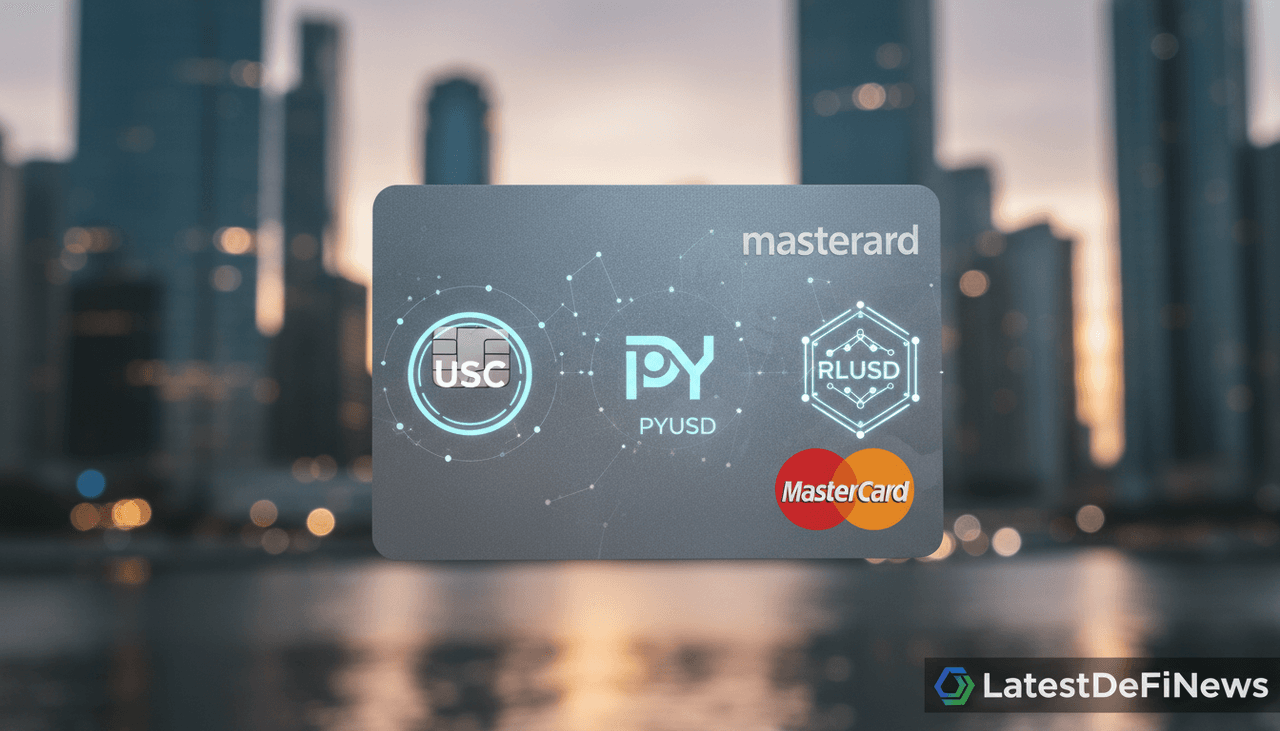
Mastercard has announced a major expansion of its stablecoin settlement framework, now supporting leading stablecoins like USD Coin (USDC), PayPal USD (PYUSD), and the upcoming Regulated Liability Network USD (RLUSD). This move allows for new settlement options across various blockchain networks, potentially streamlining cross-border payments and enhancing the utility of stablecoins for businesses and consumers within Mastercard's vast ecosystem. The initiative underscores a growing trend of traditional finance embracing digital currencies for their efficiency and speed, setting a new precedent for how established financial players interact with the burgeoning digital asset space.
Market focus
Key takeaways
- Mastercard has expanded its stablecoin settlement capabilities to include USDC, PYUSD, and RLUSD across multiple blockchain networks.
- This move significantly enhances the utility and mainstream adoption potential for these stablecoins within traditional financial systems.
- Traders should monitor stablecoin transaction volumes and regulatory developments as competition in the digital payments space intensifies.
- The initiative underscores a growing trend of traditional finance integrating digital assets for more efficient global payments and treasury management.
- This development could accelerate infrastructure evolution and regulatory clarity for stablecoins, benefiting businesses, consumers, and crypto developers.
Mastercard's Strategic Leap into Stablecoin Settlement
In a move poised to significantly bridge the gap between traditional finance and the digital asset economy, payments behemoth Mastercard has announced an expansion of its stablecoin settlement capabilities. The company will now support leading stablecoins such as USD Coin (USDC), PayPal USD (PYUSD), and the forthcoming Regulated Liability Network USD (RLUSD) for settlement across multiple blockchain networks. This development marks a pivotal moment, extending Mastercard's existing digital asset initiatives and signaling a deeper commitment to integrating blockchain-based payments into its global infrastructure.
The integration means that businesses and financial institutions leveraging Mastercard's network could soon settle transactions using these stablecoins, potentially bypassing traditional banking rails for certain operations. This offers the promise of faster, more cost-effective, and transparent cross-border transactions, addressing long-standing inefficiencies in global payments.
What This Means for the Ecosystem
Mastercard's endorsement of these stablecoins is more than just a technical upgrade; it's a powerful validation of stablecoins' potential as a reliable medium of exchange within regulated financial frameworks. By facilitating settlement in these digital assets, Mastercard is not only enhancing its own service offerings but also contributing to the broader mainstream adoption and utility of stablecoins.
For USDC, PYUSD, and RLUSD, this represents a substantial boost in credibility and potential transaction volume. USDC, already a dominant force in the stablecoin market, gains further legitimacy and reach. PYUSD, PayPal's recent entry, sees its utility immediately amplified by integration into a global payment giant's network. RLUSD, still in its nascent stages, benefits from early inclusion in a major financial infrastructure, hinting at its strategic importance for future regulated digital currency initiatives.
Market Implications and What Traders Should Watch
- Increased Utility and Adoption: This move is likely to drive increased demand and utility for the supported stablecoins. Traders should monitor on-chain metrics for USDC and PYUSD, looking for spikes in transaction volume and active addresses as businesses begin to leverage these new settlement options.
- Competitive Landscape: Mastercard's expansion could intensify competition among stablecoin issuers and traditional payment processors. Watch for responses from Visa, American Express, and other payment networks, as they may accelerate their own digital asset strategies to remain competitive.
- Regulatory Scrutiny: As major financial players like Mastercard embrace stablecoins, regulatory bodies worldwide will likely increase their focus on stablecoin frameworks. Developments in stablecoin regulation, particularly around consumer protection and financial stability, will be crucial.
- Infrastructure Evolution: The reliance on multiple blockchain networks for settlement highlights the growing importance of interoperability and robust blockchain infrastructure. Investors should keep an eye on the underlying blockchain technologies that facilitate these transactions, as their performance and scalability will be key.
Practical Value for the Community
For businesses, this offers a new avenue for efficient treasury management and cross-border payments, potentially reducing foreign exchange costs and settlement times. For consumers, while direct settlement in stablecoins might not be immediate, it lays the groundwork for future innovations in digital payments, making transactions faster and more seamless globally.
Developers and builders in the crypto space will find renewed confidence and opportunities. Mastercard's integration validates the foundational work being done in stablecoin technology and blockchain infrastructure, potentially attracting more talent and investment into projects that enhance digital payment rails.
The Road Ahead
While the announcement is significant, the full impact will unfold over time. The successful implementation and widespread adoption of these new settlement options will depend on various factors, including regulatory clarity, merchant acceptance, and user experience. Nevertheless, Mastercard's strategic embrace of stablecoins marks a clear signal: digital assets are no longer on the periphery but are increasingly becoming integral to the future of global finance.