Nakamoto Implements Reverse Stock Split to Avert Nasdaq Delisting After 99% Share Price Plunge: LatestDeFiNews
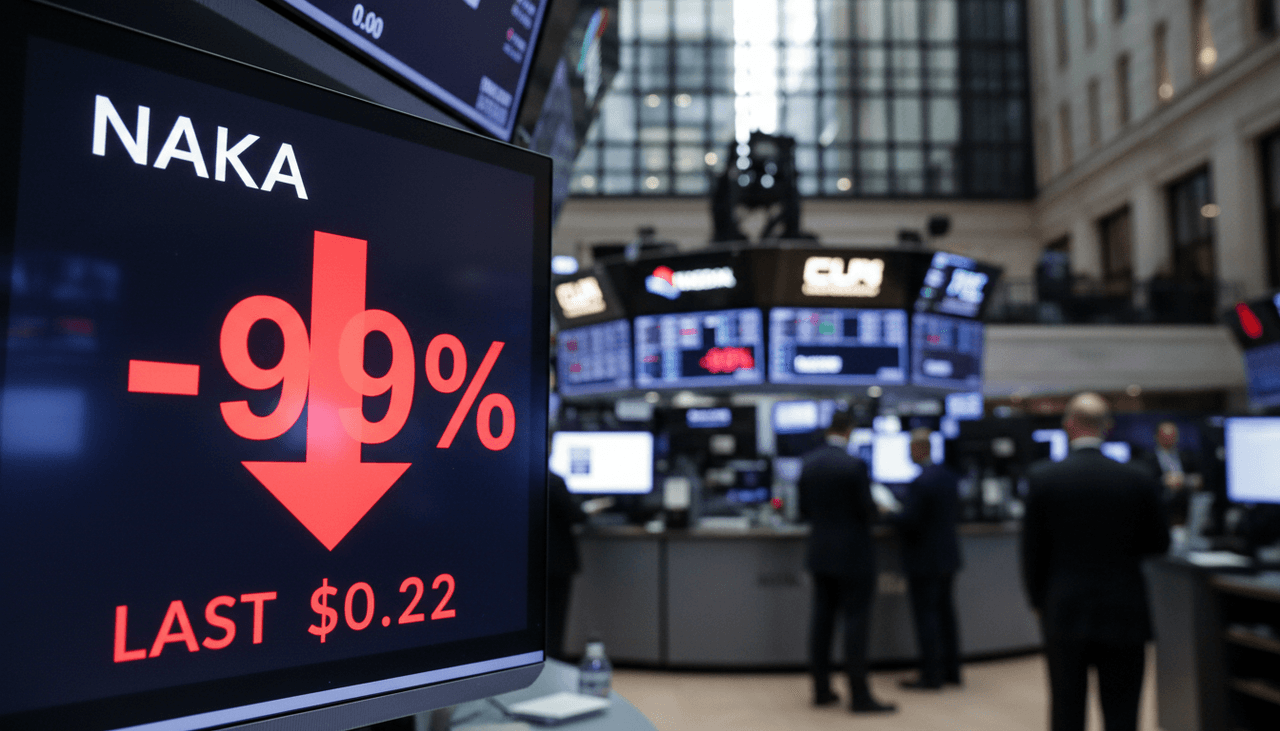
Bitcoin treasury firm Nakamoto (NAKA) is executing a reverse stock split, ranging from 1-for-20 to 1-for-50, in a bid to boost its share price and meet Nasdaq's minimum bid requirement after its stock plummeted 99% from its 2025 peak.
Why it matters
David Bailey's Nakamoto, a bitcoin treasury company, is undertaking a reverse stock split to prevent delisting from Nasdaq. The company's shares have fallen by approximately 99% since May 2025, trading around $0.22, well below Nasdaq's $1 minimum bid price. The proposed split, ranging from 1-for-20 to 1-for-50, aims to proportionally increase the share price without altering the company's fundamental value. This move comes as Nakamoto also registered over 400 million shares for resale and outlined plans for up to $7 billion in future securities issuance, signaling ongoing financial pressures and potential dilution. The firm recently sold a portion of its Bitcoin holdings, reducing its treasury to 5,058 BTC, highlighting liquidity management efforts in a volatile market where BTC prices have significantly declined.
Market focus
Key takeaways
- Bitcoin treasury firm Nakamoto (NAKA) is implementing a reverse stock split (1:20 to 1:50) to regain Nasdaq compliance after its share price plummeted 99% from its May 2025 peak.
- A reverse stock split increases share price cosmetically for compliance but does not alter underlying company value and often signals significant financial distress.
- Nakamoto has registered over 400 million shares for resale and plans up to $7 billion in future securities issuance, indicating potential for substantial shareholder dilution.
- The company recently sold 5% of its Bitcoin holdings, reducing its treasury to 5,058 BTC, highlighting active liquidity management amidst challenging market conditions for crypto-exposed firms.
Nakamoto Resorts to Reverse Stock Split Amidst Nasdaq Delisting Threat
Bitcoin treasury firm Nakamoto (NAKA), helmed by David Bailey, is taking drastic measures to maintain its listing on the Nasdaq exchange. Faced with a staggering 99% collapse in its share price since its May 2025 peak, the company is proposing a reverse stock split, a common but often concerning maneuver in traditional finance.
The proposed split, which could range from 1-for-20 to 1-for-50, aims to artificially inflate Nakamoto's share price to meet Nasdaq's stringent $1 minimum bid requirement. Currently trading at roughly $0.22, NAKA is well below the threshold, risking delisting if it fails to comply within a specified period.
A Familiar Playbook for Troubled Stocks
A reverse stock split reduces the number of outstanding shares while proportionally increasing the price per share. For instance, a 1-for-20 split would consolidate 20 shares trading at $0.20 into a single share valued at $4. Crucially, this action does not alter the company's underlying market capitalization or fundamental value. Instead, it's a cosmetic adjustment designed to satisfy exchange listing rules.
While necessary for compliance, reverse splits are often viewed by investors as a red flag, signaling significant financial distress or a lack of confidence in the company's ability to organically grow its share price.
Beyond the Split: Dilution Concerns Loom Large
Nakamoto's financial maneuvering extends beyond the reverse split. The company has also registered over 400 million shares for potential resale by existing investors. This 'shelf registration' does not raise new capital but creates a substantial overhang in the market, meaning a large supply of shares could be sold at any time, potentially exerting downward pressure on the stock.
Further compounding these concerns, Nakamoto has outlined plans for up to $7 billion in future securities issuance, separate from an 'at-the-market' (ATM) program allowing for the sale of approximately $5 billion in newly issued shares directly into the market over time. These measures collectively point to significant potential for future shareholder dilution.
Liquidity Management and Market Context
The pressures on Nakamoto are not isolated. The firm recently sold about 5% of its bitcoin holdings, reducing its treasury to 5,058 BTC. This move underscores ongoing liquidity management efforts, likely in response to operational needs or market conditions. The broader context for bitcoin treasury firms has been challenging, with many experiencing significant share price declines mirroring the volatility in BTC's spot price, which has fallen from over $126,000 in October to around $70,000.
Other companies in the sector, such as Strive Asset Management, have also resorted to similar reverse stock splits earlier this year, indicating a sector-wide struggle for some firms to maintain market confidence and exchange compliance amidst a fluctuating crypto market.
What This Means for Investors and the Market
For traders and investors, Nakamoto's actions signal a company under considerable strain. While the reverse split addresses immediate delisting risks, it doesn't resolve the underlying issues that led to the 99% share price depreciation. The specter of significant dilution from registered shares and future issuances could continue to weigh on NAKA's stock performance.
The situation at Nakamoto serves as a stark reminder of the financial pressures faced by publicly traded companies heavily exposed to bitcoin's price volatility. It highlights the importance of scrutinizing not just a company's crypto holdings, but also its broader corporate finance strategies and market positioning.