NEAR Protocol Set for Automated Scaling with Dynamic Resharding, Token Surges: LatestDeFiNews
NEAR Protocol is preparing for a significant upgrade in June, introducing dynamic resharding to automatically scale its network based on demand. This move, aimed at bolstering an AI-driven on-chain economy and enhancing security with post-quantum-safe signing, has sent the NEAR token soaring by nearly 30%.
Why it matters
NEAR Protocol is set to implement dynamic resharding in June, a pivotal upgrade designed to enable its blockchain to automatically expand its capacity without manual intervention. This innovation is crucial for supporting a burgeoning AI-driven on-chain economy and aligns with NEAR's foundational vision for scalability. Concurrently, the protocol will integrate post-quantum-safe signing to future-proof against quantum computing threats. The market has reacted positively, with the NEAR token experiencing a substantial price surge, further fueled by strong inflows into the Bitwise Near Staking ETP.
Market focus
Key takeaways
- NEAR Protocol will implement dynamic resharding in June, enabling its network to automatically scale capacity without manual intervention.
- This upgrade is crucial for supporting an AI-driven on-chain economy and aligns with NEAR's vision for ultimate scalability.
- The protocol is also adding post-quantum-safe signing to protect against future quantum computing threats, enhancing long-term security.
- The NEAR token has surged by nearly 30% following the announcement, bolstered by significant inflows into the Bitwise Near Staking ETP.
NEAR Protocol Embraces Automated Scaling with Dynamic Resharding
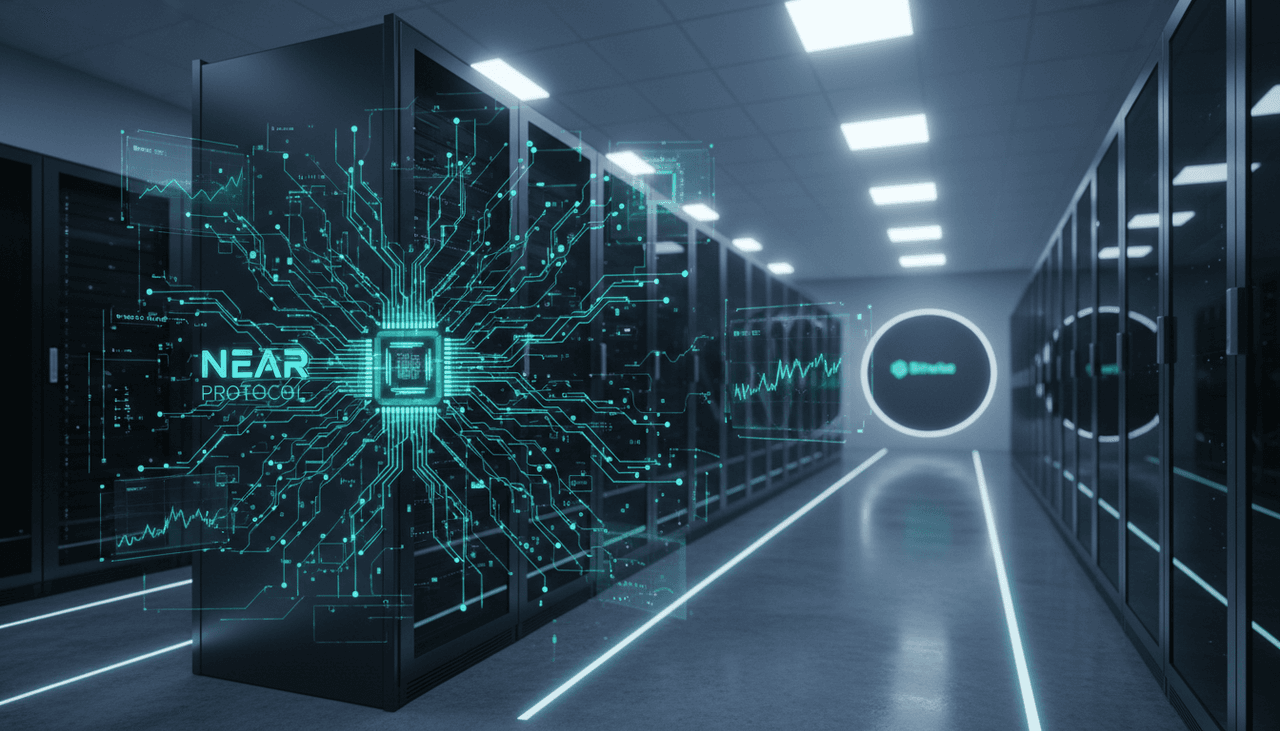
NEAR Protocol is on the cusp of a transformative upgrade, slated for June, that promises to redefine its scalability capabilities. The network will introduce dynamic resharding, an innovative mechanism designed to allow the blockchain to automatically expand its capacity in response to growing demand, all without requiring human oversight.
This strategic enhancement is not merely about increasing transaction throughput; it's a foundational step towards supporting a future where an AI-driven on-chain economy thrives. By enabling the network to adapt autonomously, NEAR aims to provide a robust and efficient infrastructure for the complex interactions expected from AI agents operating on-chain.
Understanding Dynamic Resharding
At its core, dynamic resharding addresses one of the primary bottlenecks in blockchain scalability. Traditional blockchains often struggle to handle increased traffic, much like a single-lane road trying to accommodate rush hour. Sharding, in essence, creates multiple parallel processing lanes, allowing the network to handle more transactions concurrently.
Until now, adding new shards on NEAR was a laborious, manual process, demanding weeks of validator coordination, a governance vote, and a phased rollout. The upcoming dynamic resharding feature automates this entire procedure. When a specific shard approaches its capacity limit, the system will automatically split it by adding more independent parallel validators. This eliminates the need for human intervention, ensuring seamless and instantaneous scaling.
As NEAR explained, this means that when a shard hits a predefined state size threshold, it will deterministically split and be validated by state witnesses, all without any human input. This automation is particularly critical for an AI-led on-chain economy, where bots are expected to conduct business with each other at high frequency and volume, demanding a network that can scale on the fly.
Fortifying Against Future Threats: Post-Quantum-Safe Signing
Beyond scalability, the impending upgrade also addresses a looming threat to cryptographic security: quantum computing. NEAR Protocol is proactively integrating “post-quantum-safe signing” into its architecture.
The specter of quantum computers capable of breaking current cryptographic standards has long concerned the developer community. By implementing quantum-resistant cryptographic primitives, NEAR is taking a significant step to safeguard user funds and data against potential future attacks from sufficiently powerful quantum machines. This forward-thinking approach ensures the long-term integrity and security of the network for its users.
NEAR Token Reacts to Positive Outlook
The market has responded enthusiastically to these developments. The NEAR token has experienced a significant surge, climbing nearly 30% in the last 24 hours to trade around $2.25, making it one of the top performers among the top 100 cryptocurrencies by market capitalization. This strong performance contrasts with broader market trends, as Bitcoin, for instance, saw a slight dip during the same period.
Investor confidence is further underscored by robust inflows into the Bitwise Near Staking ETP (Exchange-Traded Product) listed in Europe. According to Bitwise CEO Hunter Horsley, the ETP has attracted $7 million in investor capital this week alone, signaling strong institutional and retail interest in NEAR's growth trajectory and staking opportunities.
What This Means for Traders and the Community
For traders and investors, NEAR’s automated scaling and quantum-proof security measures present a compelling narrative of a protocol building for the future. The ability to scale dynamically reduces the risk of network congestion during peak demand, which can be a significant factor in user experience and adoption. The proactive move towards quantum safety also positions NEAR as a secure, long-term investment in an evolving technological landscape.
Builders and developers within the NEAR ecosystem will benefit from a more resilient and performant network, enabling them to create more sophisticated and high-demand applications, particularly those leveraging AI. The wider crypto community gains another example of a Layer-1 protocol pushing the boundaries of blockchain technology, addressing critical challenges in scalability and security head-on.
FAQ
What is dynamic resharding?
Dynamic resharding is a mechanism that allows a blockchain network, like NEAR Protocol, to automatically increase its processing capacity by adding new shards (parallel transaction lanes) as demand grows, without requiring manual intervention or network downtime.
How does dynamic resharding benefit an AI-driven on-chain economy?
An AI-driven on-chain economy is expected to generate high volumes of transactions and complex interactions between AI agents. Dynamic resharding ensures the network can scale instantly and efficiently to handle this demand, providing a stable and performant environment for AI applications.
What is post-quantum-safe signing?
Post-quantum-safe signing refers to the implementation of cryptographic methods that are resistant to attacks from powerful quantum computers. This upgrade aims to future-proof NEAR Protocol's security, protecting user assets and data from potential threats posed by quantum computing advancements.