SEC Delay Casts Shadow on Tokenization's Wall Street Ascent, Sending Crypto Stocks Lower: LatestDeFiNews
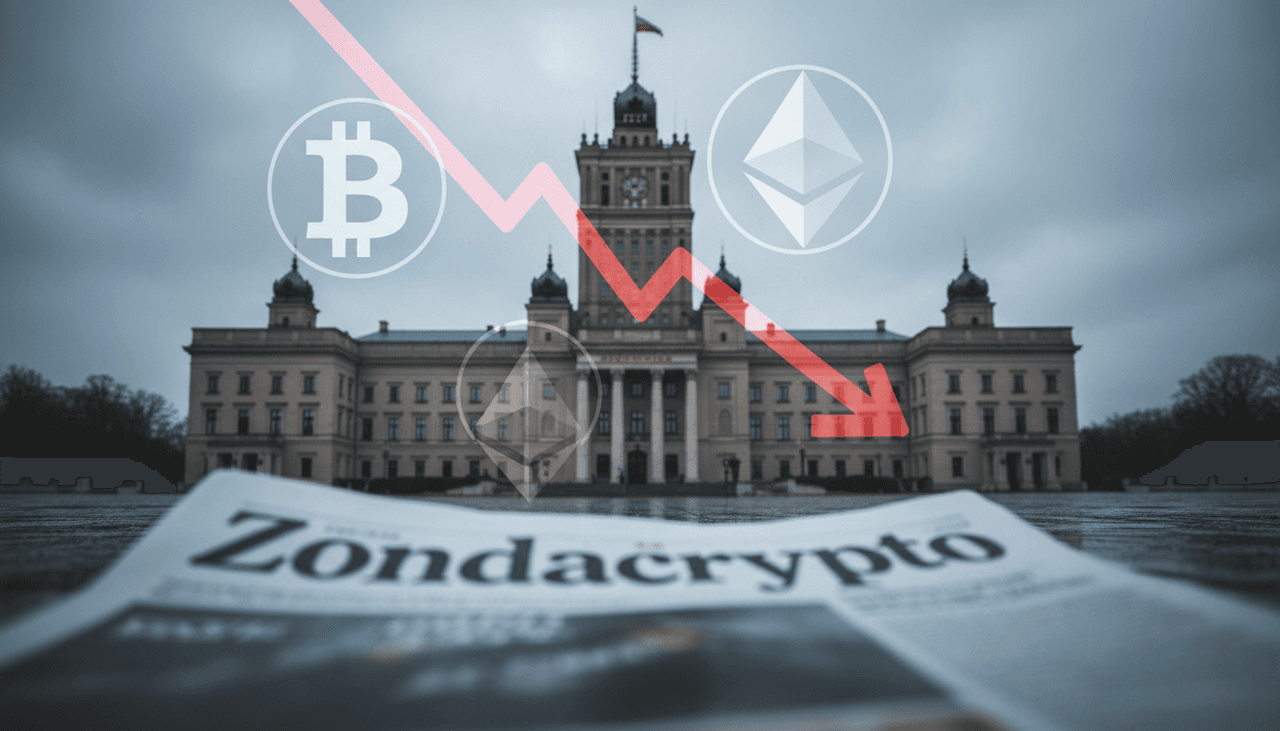
The SEC's unexpected delay of a key 'innovation exemption' and cancellation of a crypto offering rules meeting have rattled tokenization-focused firms, signaling a regulatory 'speed bump' for crypto's integration into traditional finance.
Why it matters
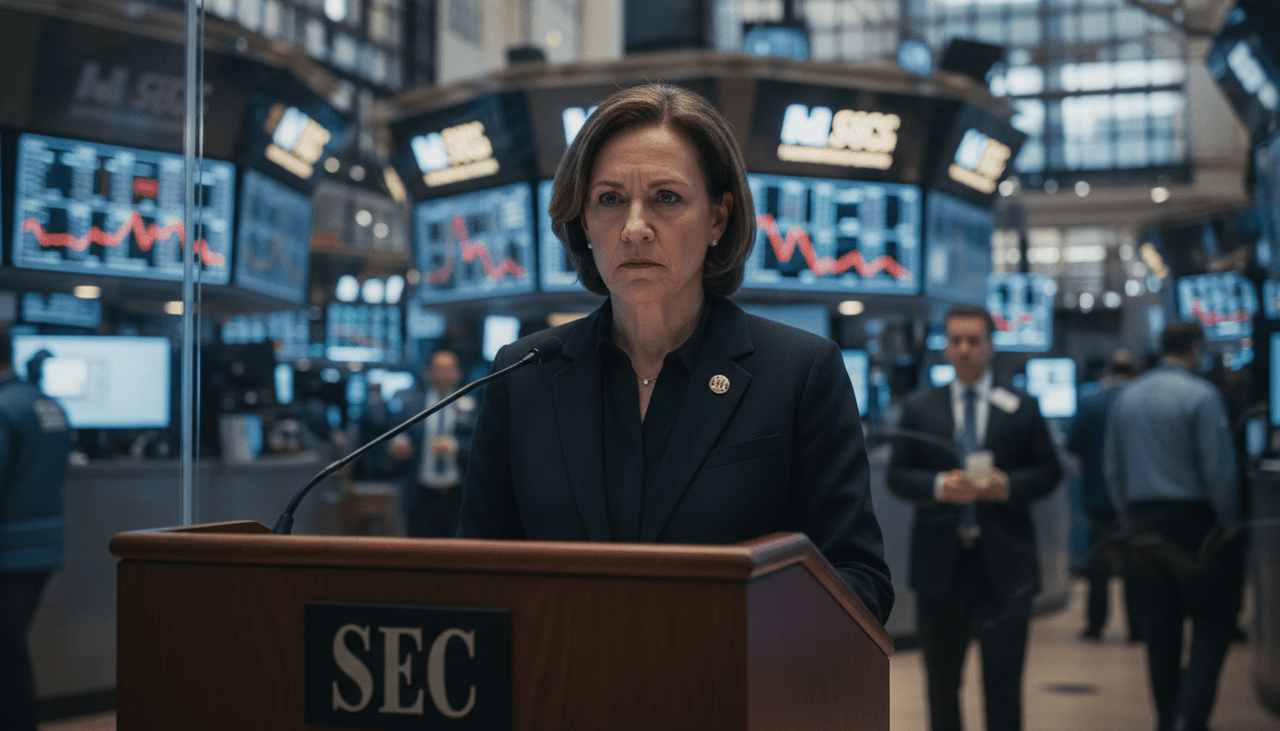
Shares of major tokenization players like Bullish, Coinbase, and Circle dipped Friday after the U.S. Securities and Exchange Commission (SEC) postponed its anticipated 'innovation exemption' for tokenized securities and canceled a meeting on new crypto offering rules. This regulatory setback, while seen by some as a 'speed bump' rather than a full derailment, has dampened investor sentiment and highlighted the ongoing challenges for crypto's expansion into Wall Street, impacting both publicly traded companies and DeFi protocols like Uniswap.
Market focus
Key takeaways
- The SEC's delay of an 'innovation exemption' and cancellation of a crypto offering rules meeting have created regulatory uncertainty for tokenized securities.
- Major tokenization-focused firms like Bullish, Coinbase, and Circle saw their stocks decline, and Uniswap's UNI token also dropped, reflecting broad market impact.
- While a 'speed bump,' experts believe the long-term momentum for tokenization and 24/7 trading infrastructure remains strong, with traditional finance players still building.
- Traders and investors should closely monitor future SEC announcements and how firms adapt their strategies to navigate the evolving regulatory landscape.
- The incident highlights that the pace of tokenization adoption in the U.S. is heavily dependent on regulatory clarity and approval.
The ambitious push to integrate digital assets into traditional finance hit a snag this week, as the U.S. Securities and Exchange Commission (SEC) unexpectedly delayed a crucial 'innovation exemption' for tokenized securities and scrapped a planned meeting on new crypto offering rules. The news sent ripples through the market, with shares of tokenization-focused firms and decentralized finance (DeFi) protocols experiencing notable declines.
Regulatory Roadblock: SEC's Actions and Market Response
The SEC's decision to further postpone its long-awaited 'innovation exemption' – a measure intended to streamline the trading of tokenized securities – immediately impacted investor confidence. Adding to the uncertainty, the regulator also canceled a scheduled meeting where commissioners were set to discuss a tailored offering regime for certain crypto asset investment contracts. These moves collectively underscore persistent concerns from both the White House and Wall Street regarding the legal framework and potential market implications of such proposals.
The market reaction was swift and broad. Bullish (BLSH), the crypto platform acquiring transfer agent Equiniti to build tokenized securities infrastructure, saw its shares fall approximately 8%. Blockchain-based lender Figure (FIGR) also gave back recent gains, declining about 9%. Crypto exchange Coinbase (COIN), which is actively pursuing its own tokenized-stock offerings, dropped 2%, while stablecoin issuer Circle (CRCL), operator of the $3 billion USYC tokenized Treasury product, slipped nearly 4%. Even Securitize (SECZ), BlackRock's tokenization partner, experienced volatility, initially falling 5% before stabilizing.
The impact wasn't confined to publicly traded equities. The innovation exemption was also anticipated to provide regulatory clarity for trading through decentralized finance (DeFi) venues. Consequently, Uniswap's native token, UNI, plunged 7% over 24 hours, making it the weakest performer in the CoinDesk 20 Index, highlighting the interconnectedness of regulatory developments and the broader crypto ecosystem.
A 'Speed Bump,' Not a Derailment for Tokenization
While the immediate market reaction was negative, industry observers are framing the setback as a temporary hurdle rather than an insurmountable barrier. Owen Lau, managing director and senior analyst at Clear Street, characterized it as a "speed bump" for tokenization. "The tokenization theme hits a speed bump, but it doesn't alter the underlying momentum," Lau stated, emphasizing that the long-term narrative for tokenized assets and 24/7 trading infrastructure remains intact.
Indeed, the foundational drivers for tokenization – enhanced liquidity, fractional ownership, and operational efficiencies – continue to attract significant interest from both crypto-native firms and traditional financial giants. Companies like Coinbase and Bullish are actively developing infrastructure and strategies for tokenized equities, while established exchanges such as Nasdaq and the New York Stock Exchange are also investing in capabilities for round-the-clock trading.
What Traders and Investors Should Watch Next
For traders and investors, this development underscores the critical role of regulatory clarity in the adoption cycle of tokenized assets. The key question now revolves around the pace at which regulators will permit these innovations to advance. While the long-term vision for tokenization remains compelling, the short-to-medium term could see continued volatility and uncertainty as firms navigate an evolving regulatory landscape.
Market participants should closely monitor:
- SEC's Next Steps: Any further communications or revised timelines from the SEC regarding the innovation exemption or new crypto offering rules will be paramount.
- Firm-Specific Strategies: How major players like Coinbase, Bullish, and Circle adapt their tokenization strategies in response to regulatory delays.
- Traditional Finance Integration: The continued development of tokenization infrastructure by traditional exchanges like Nasdaq and NYSE, which could signal a more robust, albeit slower, path to adoption.
- DeFi Regulatory Impact: The ongoing implications for decentralized exchanges and protocols that stand to benefit from clearer rules around tokenized securities.
Ultimately, the SEC's recent actions serve as a reminder that while the technological promise of tokenization is vast, its realization within the U.S. financial system is inextricably linked to regulatory progress. The current environment calls for patience and strategic adaptation from all stakeholders.