U.S. Sanctions Major Iranian Crypto Exchanges Nobitex, Wallex Over Terror Financing and Sanctions Evasion: LatestDeFiNews
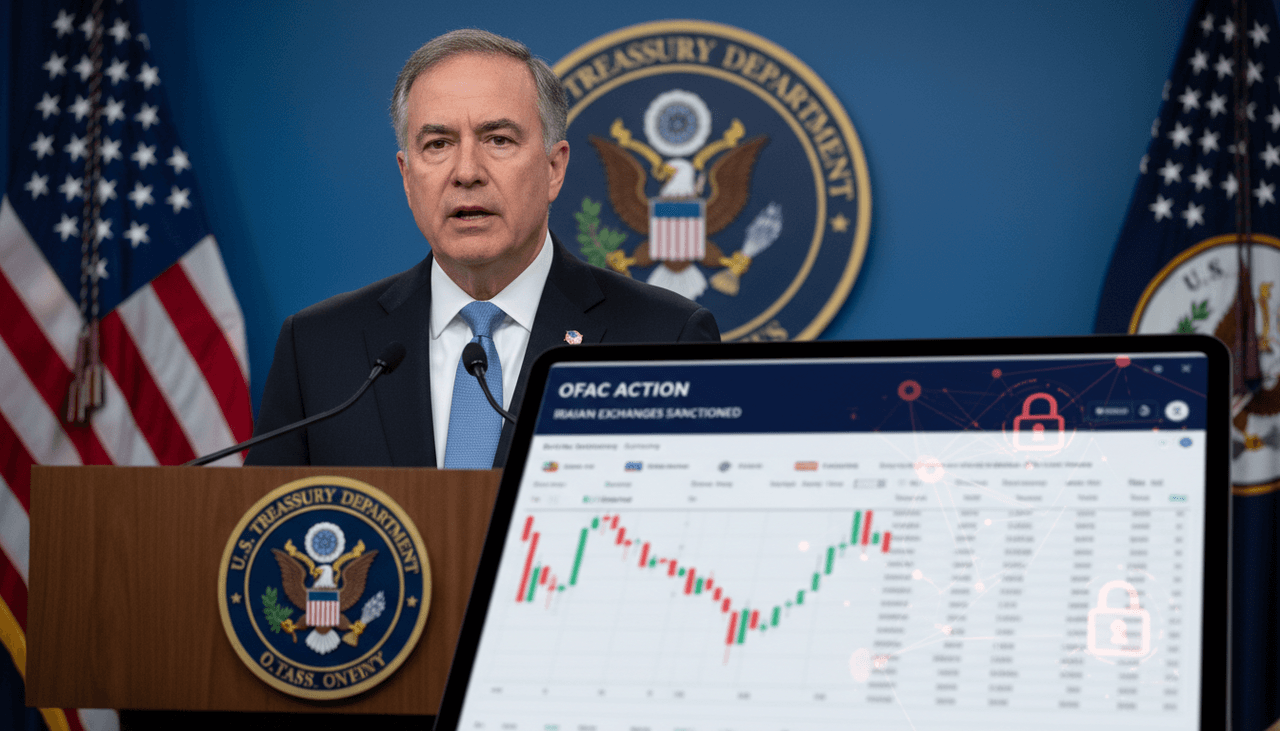
The U.S. Treasury Department's OFAC has blacklisted Iran's largest crypto exchange, Nobitex, alongside three other platforms and several executives, alleging their involvement in terror financing, sanctions evasion, and illicit asset transfers.
Why it matters
The U.S. Treasury Department's Office of Foreign Asset Control (OFAC) has imposed sanctions on four prominent Iranian cryptocurrency exchanges—Nobitex, Wallex, Bitpin, and Ramzinex—along with key executives. This move, part of an escalating 'maximum pressure campaign' against Iran, targets entities accused of facilitating terror activities, evading international sanctions, and moving assets out of the country, including ransomware payments. The announcement follows Treasury Secretary Scott Bessent's revelation that the U.S. has seized approximately $1 billion in crypto from Iranian sources since the conflict began, underscoring Washington's commitment to disrupting Iran's use of digital assets for illicit purposes.
Market focus
Key takeaways
- The U.S. Treasury's OFAC has sanctioned four major Iranian crypto exchanges, including Nobitex, and their executives.
- The sanctions cite alleged involvement in terror financing, sanctions evasion, IRGC-linked transactions, and ransomware payments.
- This action is part of a broader U.S. 'maximum pressure campaign' against Iran, following the seizure of approximately $1 billion in Iranian crypto assets.
- The Treasury also warned against 'toll' payments, including those made with digital assets, for passage through the Strait of Hormuz.
- The move highlights the increasing role of digital assets in geopolitical conflicts and the U.S.'s commitment to disrupting illicit financial flows.
U.S. Escalates Sanctions Against Iranian Crypto Sector
The U.S. Treasury Department has significantly intensified its economic pressure on Iran, blacklisting several key cryptocurrency exchanges and their executives. The Office of Foreign Asset Control (OFAC) announced Tuesday that Iran's largest crypto platform, Nobitex, along with Wallex, Bitpin, and Ramzinex, have been added to its Specially Designated Nationals (SDN) list. This action effectively bars any U.S. entities or individuals using the U.S. dollar financial system from engaging in transactions with these platforms.
Allegations of Terror Links and Sanctions Evasion
The Treasury's statement explicitly linked Nobitex and the other sanctioned entities to a range of illicit activities. These include alleged associations with "Iran's terrorist activities, sanctions evasion efforts and Islamic Revolutionary Guard Corps (IRGC)-linked transactions." Notably, the accusations also encompass facilitating ransomware payments and assisting in the movement of assets out of Iran following the U.S. military actions earlier this year.
Treasury Secretary Scott Bessent underscored the gravity of the situation, stating, "While Iran’s economy is in free fall, the regime has chosen to co-opt digital asset technologies for its own corrupt agenda, including evading sanctions and transferring wealth out of the country." Bessent further asserted that Iran's current economic turmoil is proof of the success of President Trump's "maximum pressure campaign."
Broader Campaign and Seized Assets
This latest round of sanctions is not an isolated incident but rather a continuation of a broader U.S. strategy. The announcement comes just days after Secretary Bessent revealed that the Treasury had seized approximately $1 billion in crypto from Iranian exchanges and wallets since the onset of the conflict with Iran. This substantial seizure highlights Washington's aggressive stance on disrupting Iran's ability to leverage digital assets for financial maneuverings that circumvent international restrictions.
Beyond the direct sanctions on exchanges, the Treasury Department also issued a stark warning regarding the Strait of Hormuz. It cautioned against the sanctions risk associated with complying with Iranian demands for passage through the vital waterway, specifically mentioning "toll" payments. These payments, the Treasury noted, could be made via fiat currency, digital assets, offsets, informal swaps, or other in-kind payments, further emphasizing the U.S.'s vigilance over all forms of financial transfers to Iran.
Implications for the Crypto Ecosystem and Traders
For the wider crypto community, these sanctions serve as a powerful reminder of the increasing intersection between digital assets and geopolitical conflicts. Traders, investors, and protocol builders must remain acutely aware of the evolving regulatory landscape and the potential for digital assets to be weaponized or targeted in international disputes.
- Compliance Risks: Any entity, regardless of location, that interacts with the U.S. financial system or U.S. persons must ensure they are not inadvertently facilitating transactions with sanctioned entities. Due diligence and robust KYC/AML procedures become even more critical.
- Market Sentiment: While these sanctions directly target specific Iranian entities, they contribute to a broader narrative of heightened regulatory scrutiny on the crypto space. This could influence market sentiment, particularly concerning privacy coins or platforms perceived as less compliant.
- Geopolitical Tool: The U.S. government's willingness to target crypto assets and exchanges as part of its foreign policy toolkit signals that digital assets are no longer on the periphery of international finance but are central to state-level economic warfare.
The actions against Iranian crypto exchanges underscore a clear message from the U.S.: digital assets offer no sanctuary for illicit financial activities, especially those linked to state-sponsored terror or sanctions evasion. As the global regulatory framework for cryptocurrencies continues to mature, such enforcement actions will likely become more frequent and sophisticated, demanding greater vigilance from all participants in the digital asset economy.