Vitalik Buterin: AI-Assisted Formal Verification is Crypto's Next Security Frontier: LatestDeFiNews
Ethereum co-founder Vitalik Buterin suggests AI-powered formal verification could be a game-changer for smart contract security, offering a robust defense against vulnerabilities and fostering greater trust.
Why it matters
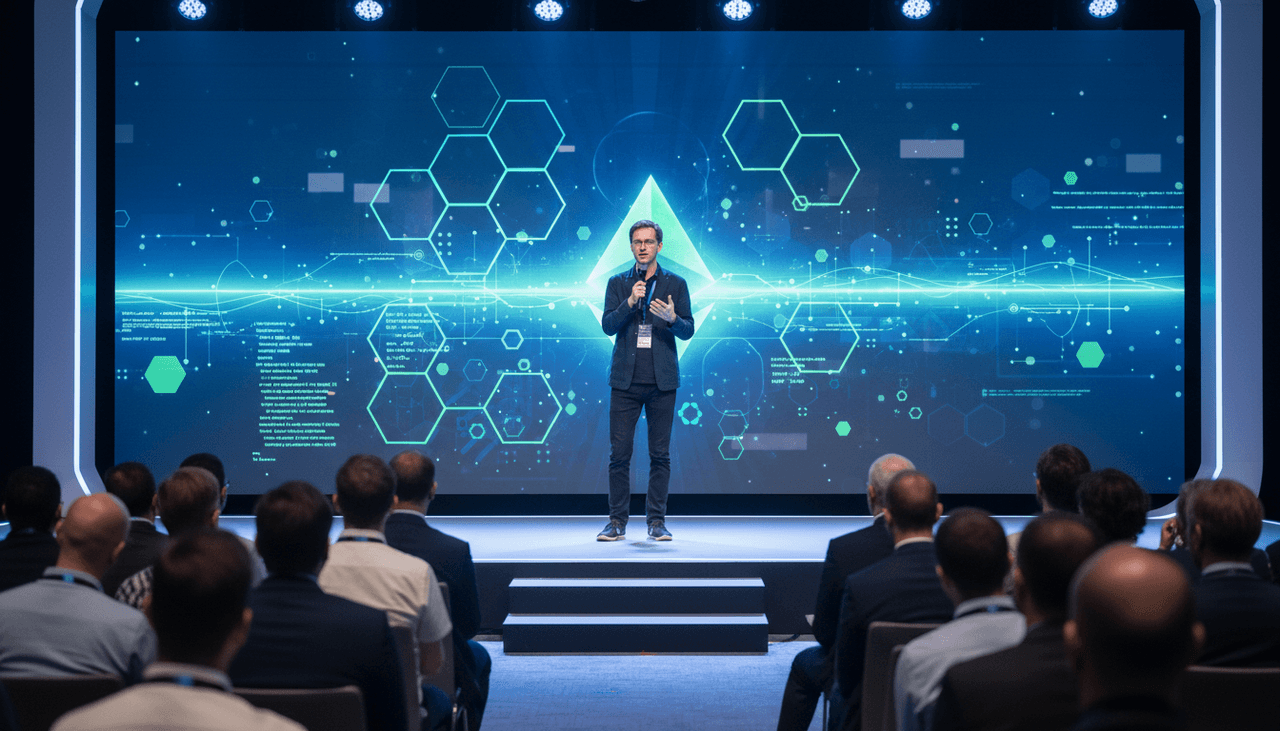
In a recent blog post, Ethereum's Vitalik Buterin articulated a vision where artificial intelligence significantly bolsters the security of blockchain protocols through advanced formal verification. He argues that AI's capacity to assist in mathematically proving the correctness of smart contract code could drastically reduce vulnerabilities and enhance trust across the crypto ecosystem, marking a pivotal shift in cybersecurity paradigms for decentralized applications. This perspective underscores a proactive approach to mitigating the persistent threat of exploits in an increasingly complex digital asset landscape.
Market focus
Key takeaways
- Vitalik Buterin advocates for AI-assisted formal verification to significantly boost crypto security by mathematically proving smart contract correctness.
- AI can automate and scale the labor-intensive formal verification process, making it more efficient and accessible for complex blockchain protocols.
- This enhanced security could drastically reduce vulnerabilities and hacks, fostering greater trust among users, investors, and institutions in the crypto ecosystem.
- The adoption of advanced verification tools will be crucial for accelerating innovation in DeFi and building a more resilient decentralized infrastructure.
Vitalik Buterin Champions AI for Enhanced Crypto Security
Ethereum co-founder Vitalik Buterin has put forth a compelling argument for the integration of AI-assisted formal verification as a critical tool to fortify the security of the crypto ecosystem. In a recent blog post, Buterin outlined how this advanced methodology could become one of the most important defenses against the persistent threat of smart contract vulnerabilities and exploits.
The core of Buterin's thesis centers on formal verification, a rigorous process that mathematically proves a piece of code behaves exactly as intended under all possible conditions. While not new to critical software systems, its application in the rapidly evolving and often complex world of blockchain has been challenging due to the sheer scale and intricacy of decentralized applications.
The AI Advantage: Scaling Security
Buterin posits that artificial intelligence can bridge this gap. Traditionally, formal verification is a highly specialized, labor-intensive task requiring deep expertise. AI tools, however, could automate significant portions of this process, making it more accessible, efficient, and scalable. This automation could allow for the verification of larger, more complex smart contracts and protocols that are currently difficult or prohibitively expensive to audit comprehensively.
The crypto space has been plagued by multi-million dollar exploits, often stemming from subtle bugs or logical flaws in smart contract code. These vulnerabilities erode user trust, deter institutional adoption, and can lead to catastrophic financial losses. Buterin's vision suggests a future where such incidents are drastically reduced, not just through better coding practices, but through a fundamental shift in how code correctness is assured.
Implications for Traders, Investors, and Builders
For traders and investors, enhanced security translates directly into reduced risk. A more formally verified ecosystem means fewer protocol failures, fewer hacks, and ultimately, a more stable and predictable market environment. This could foster greater confidence, potentially attracting more capital into DeFi and other blockchain sectors.
Builders and protocol developers stand to gain immensely. The ability to deploy smart contracts with a higher degree of mathematical certainty regarding their security could accelerate innovation. Developers could focus more on functionality and less on the constant fear of undiscovered vulnerabilities, leading to more robust and ambitious decentralized applications. Furthermore, protocols that embrace these advanced verification methods could gain a significant competitive edge, signaling a commitment to user safety and reliability.
What to Watch Next
The practical value of Buterin's insights lies in prompting the community to focus on the development and adoption of these tools. Investors and builders should monitor the progress of AI-assisted formal verification research and the emergence of specialized audit firms leveraging these technologies. Key indicators will include the availability of user-friendly tools, the integration of these methods into standard development workflows, and their proven track record in preventing real-world exploits.
Ultimately, a future where AI and formal verification work in tandem promises a more secure, trustworthy, and resilient blockchain infrastructure. This evolution is not just about preventing hacks; it's about laying a stronger foundation for the next generation of decentralized innovation.
FAQ
What is formal verification in simple terms?
Formal verification is a rigorous process that uses mathematical methods to prove that a computer program, like a smart contract, will always behave exactly as intended under all possible conditions, without any unexpected errors or vulnerabilities.
How does AI help with formal verification?
AI can assist by automating complex and time-consuming parts of the verification process, such as generating test cases, identifying potential logical flaws, or simplifying the mathematical proofs, thereby making formal verification more scalable and efficient than manual methods.