Bitcoin Surges Past $77K as Iran Declares Strait of Hormuz Open, Oil Prices Fall: LatestDeFiNews
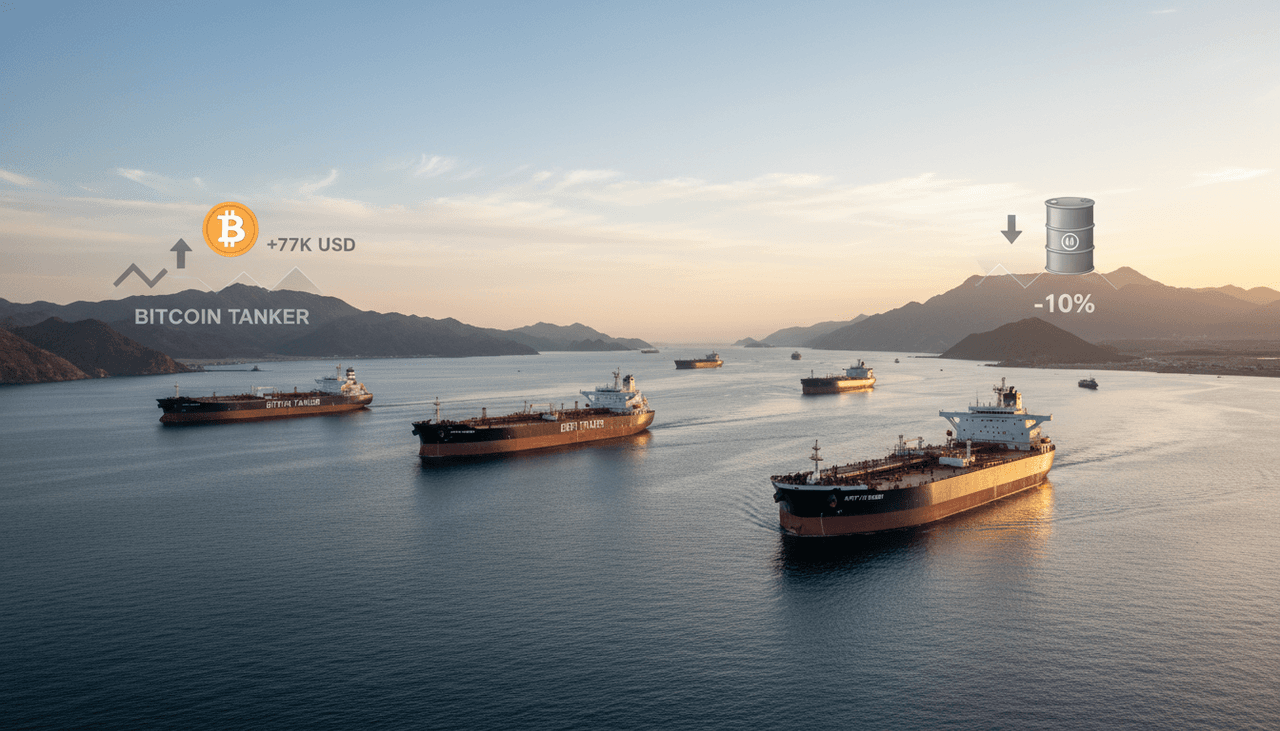
Bitcoin rallied above $77,000 and oil futures dropped sharply after Iran announced the Strait of Hormuz would remain open for commercial traffic during the ongoing ceasefire, signaling a temporary de-escalation of Middle East tensions.
Why it matters
Following Iran's declaration that the critical Strait of Hormuz shipping lane is open for the duration of the current ceasefire, Bitcoin experienced a significant rally, pushing past the $77,000 mark. Concurrently, Brent crude oil futures saw a substantial 10% decline. This market reaction reflects a renewed appetite for risk assets as geopolitical anxieties temporarily subside, though the impending end of the ceasefire looms.
Market focus
Key takeaways
- Bitcoin surged past $77,000, gaining over 3.7% in 24 hours, following Iran's announcement regarding the Strait of Hormuz.
- Brent crude oil futures dropped 10% to $85 per barrel, reflecting eased geopolitical tensions.
- The market reaction signals a return of risk appetite, with investors re-entering markets after a period of caution.
- The current US-Israel-Iran ceasefire is set to expire on April 22nd, posing a potential trigger for renewed market volatility.
- Discussions for a broader US-Iran deal, involving frozen funds and uranium, could offer a more lasting de-escalation, but remain subject to ongoing negotiations.
Geopolitical Easing Fuels Bitcoin Rally
Bitcoin (BTC) surged past the $77,000 threshold on Friday, marking a notable 3.7% gain within 24 hours and extending its weekly recovery to approximately 5%. This upward momentum in the crypto market's flagship asset arrived on the heels of a significant geopolitical announcement from Iran.
Iran’s Foreign Minister, Seyed Abbas Araghchi, confirmed via an X post that the strategically vital Strait of Hormuz would remain open for commercial vessel traffic throughout the current ceasefire period between the US, Israel, and Iran. This declaration, subsequently corroborated by US President Donald Trump on Truth Social, immediately reverberated across global financial markets.
Oil Prices Plunge as Risk Appetite Returns
The immediate consequence of this de-escalation was a sharp decline in oil prices. Brent crude oil futures plummeted by 10%, settling around $85 per barrel. This inverse correlation highlights how quickly markets react to shifts in geopolitical stability, particularly concerning critical energy supply routes.
Market analysts, including those at The Kobeissi Letter, noted a palpable return of risk appetite among investors. Many who had de-risked their portfolios in March are now reportedly "rushing back into the market." This sentiment shift was also reflected in broader equities, with the S&P 500 index adding an estimated $7 trillion over the past three weeks.
What Traders Should Watch Next
While the current news provides a temporary reprieve, the underlying geopolitical landscape remains complex. The two-week ceasefire is slated to expire on April 22nd, introducing a renewed period of uncertainty. Traders and investors should closely monitor developments as this deadline approaches, as any renewed escalation could quickly reverse the current positive sentiment.
Adding another layer to the diplomatic efforts, Axios reported that US officials are discussing a proposal to release up to $20 billion in frozen Iranian funds. In exchange, Iran would reportedly agree to relinquish its stockpile of enriched uranium. This potential broader deal, if it materializes, could offer a more sustained path to de-escalation, but President Trump cautioned that the US naval blockade would remain "in full force and effect" until any transaction with Iran is "100% complete."
The interplay between these high-stakes diplomatic maneuvers and their immediate market impact underscores the increasing sensitivity of crypto assets to global macroeconomic and geopolitical events. While Bitcoin's resilience in the face of easing tensions is evident, the path forward remains contingent on the delicate balance of international relations.